Two years ago this week–February 12, 2015 to be exact–Stone & Baxter launched Plan Proponent. 65 blog posts, 48 email subscribers, and almost 13,000 hits later, here we are. In honor of our 2 year anniversary, we figured we’d revisit one of the topics that started it all for our niche blog: the absolute priority rule in individual Chapter 11 bankruptcy cases. David Cassidy’s Chapter 11 case gave our first ever absolute priority rule post a perfect lead-in, as Cassidy, the star of the 1970s “The Partridge Family,” filed his bankruptcy case in the Southern District of Florida right as Plan Proponent was kicking off.

Our theory back then: Cassidy’s case might provide the “test case” for the Eleventh Circuit to create a split of authority on this important dispute and, thus, necessitate U.S. Supreme Court involvement. The outcome: David Cassidy didn’t get around to filing his Chapter 11 Plan until January 27, 2017. Thus, he has so far only provided us very timely “click bait,” initially in 2015 (that post is our second most popular post ever) and again in 2017 as we hit the 2 year mark.

Therefore, our anniversary post will revisit Mr. Cassidy’s Chapter 11 case and revisit the absolute priority rule.

As a long overdue bonus, we’ve updated our APR Case Chart to include all relevant APR decisions since May of 2014! For those strange folks with zero interest in celebrity bankruptcies, you can skip to the conclusion for bad, but not surprising, news about the absolute priority rule.

It’s Been a Tough, but Productive, Two Years for David Cassidy

The Lead-Up to the Cassidy Chapter 11 Plan

We’re not sure if we should be proud or troubled that Plan Proponent, Daily Mail, and Radar Online are leading the way, internationally, in the coverage of David Cassidy’s Chapter 11 bankruptcy case. In any event, much has happened–most of it kinda sad if you’re a child of the ’70s–over the last 2 years.

Cassidy’s Disclosure Statement indicates that he’s 65 years old; his TV and music royalties have dried-up as a result of SONY not using his likeness as often as it used to; and, as much as Cassidy “still loves performing for his fans,” health issues make it hard for him to travel and perform. Although a long and difficult royalties suit against SONY resulted in a $158K arbitration award for Cassidy, $173K in litigation costs (before the contingent fee) absorbed all of the award. Those circumstances, combined with some troubled Bahamas real estate investments and a nasty divorce, resulted in Cassidy’s early 2015 filing.

When David Cassidy filed, he disclosed assets of $3.7 million and liabilities of $2.1 million.

The $3.7 million in assets consisted of his home in Ft. Lauderdale ($3M), some Wells Fargo IRAs ($523K), a 2009 Corvette and a 2004 Lexus ($42K), a portion of an arbitration award against Sony ($95K) which ended-up being worthless, cash in bank accounts (around $4K), and some miscellaneous household furnishings ($20K+). He also scheduled 2 real estate lots in the Bahamas (originally purchased for $388K each) as having an “Unknown” value.

The $2.1 million in liabilities consisted of Wells Fargo, with a first mortgage of $804K and an equity line of $855K, for a total of $1.66 million. Cassidy also scheduled Ally Financial as having an $11K claim secured by his Corvette. The only unsecured creditors that Cassidy didn’t schedule as “disputed” were American Express ($22K), some medical providers ($1K), some unpaid attorneys’ fees ($18K), and a Wells Fargo personal line of credit ($293K), for total undisputed and unsecured claims of around $334K to go with secured claims of around $1.67M.

Ultimately, Cassidy and his ex-wife, Susan Shifrin, sold their marital home in late 2015 in a court-approved auction for a little bit more than the debt, but for far less than the $3 million that they had hoped for. It appears that the sale also included a large part of their household furnishings.

Cassidy also sold his 2009 Corvette in early 2016 in a bankruptcy court-approved private sale. He received $27,500. Finally, it appears that, as a part of Cassidy’s early 2016 divorce mediation, his ex-wife agreed to take the 2 lots in the Bahamas and assume any related liabilities. They also split Cassidy’s pension interests, IRAs, the modest net proceeds from the home sale, and some of their remaining household items.

Cassidy’s January 2017 Chapter 11 Plan

By auctioning his home, selling his Corvette, abandoning the lots in the Bahamas, and settling his nasty divorce, David Cassidy positioned himself for a simple, straightforward Chapter 11 Plan. In fact, unless there’s something we’re missing, he’s keeping and offering so little that a Chapter 7 conversion seems more appropriate at this point.

Specifically, Cassidy got rid of Wells Fargo on the house and is positioned to get rid of Ally Financial on the Corvette (out of the car’s proceeds). His ex-wife also agreed to be responsible for the Wells Fargo line of credit. Therefore, Cassidy is left with unsecured claims–which he doesn’t intend to dispute–of $216K. Those claims are owed, collectively, to American Express ($22K), various attorneys for unpaid litigation fees ($144K), and a plaintiff who sued Cassidy for a botched eBay sale of Cassidy’s boat and Mercedes (a total claim of $50K).

Cassidy proposes to pay those claims by paying $500 per month (or is it $800?) in disposable income from his “wages” for 60 months, with pro rata distributions to the 4 unsecured creditors. Frankly, his plan documents are kind of a mess of typos, inconsistencies, etc. On the face of the pleadings, though, it appears that Cassidy will make those payments out of his Social Security ($2,142/mo.) and martial portion of his SAG pension ($2,0000/mo). Cassidy claims in his Disclosure Statement that he is retaining “nonexempt assets” with a net liquidation value of $8,757.46.

The hearing on the Disclosure Statement is scheduled for March 22, 2017.

Cassidy is Likely Not the Absolute Priority Rule Test Case After All

In short, Cassidy is proposing to pay his remaining creditors $0.13 on the dollar. On the one hand, he’s violating the absolute priority rule because he is proposing to retain non-exempt, albeit de minimis, personal property without paying unsecured creditors in full. Therefore, short of creditor consent, he can’t confirm a plan.

On the other hand, it doesn’t appear that his newsworthy bankruptcy case will provide the 11th Circuit APR test case that we had hoped for or, at least, joked about, especially given that he owes his bankruptcy attorney at least $70K in attorney’s fees. Creditors might consent, but we can’t imagine Cassidy taking up, or even needing to take up, the absolute priority rule issue.

It’s Also Been a Tough, but Productive,Two Years for the Absolute Priority Rule Issue

Even if David Cassidy had plenty of assets to keep and lots of money to fight the absolute priority rule issue, the law has shifted even more against him since he filed his bankruptcy case in February of 2015.

As we explained originally, all of the Circuit Courts (4th, 5th, 6th, and 10th) that had addressed the APR issue as of Cassidy’s filing adopted the “narrow view” and, thus, concluded that the APR continued to apply in individual Chapter 11 cases. Additionally, we noted that most bankruptcy courts that had addressed the issue as of his filing, especially those addressing it recently, had reached the same conclusion. At most, individual debtors could defend the In re Friedman decision from the 9th Circuit B.A.P. wherein the panel had adopted the “broad view” (i.e., the view that the 2005 BAPCPA changes to the Bankruptcy Code rendered the APR inapplicable in individual Chapter 11 cases). See our other APR posts for background.

Debtors, at least at that time, could also cling to 2 bankruptcy opinions in the 8th Circuit: In re O’Neal (Arkansas) and In re Woodward (Nebraska).

Two years later, though, the 8th Circuit B.A.P. and the 9th Circuit have pulled the rug out from underneath debtors on this issue. Specifically, the 8th Circuit B.A.P. reversed the In re Woodward decision in August of 2015 and, by implication, called In re O’Neal into question. Worse, the 9th Circuit overruled In re Friedman in January of 2016 when it adopted the narrow view in Zachary v. California Bank & Trust. Finally, 10 out of the 10 courts that have addressed the applicability of the APR in individual cases since May of 2013 have adopted the narrow view.

Conclusion

For the Circuit watchers, the 4th, 5th, 6th, 9th, and 10th Circuits have ruled that the absolute priority rule still applies in individual Chapter 11 cases, as has the 8th Circuit B.A.P. That leaves the 1st, 2nd, 3rd, 7th, 11th, and D.C. Circuits as those Circuits who have not yet weighed-in.

We’ll continue to hold our breath for a split. In the mean time, we’ve updated our APR Chart to include all 10 of the recent APR cases.

If you’d like to stay on top of this issue and other important confirmation issues, then you can subscribe to Plan Proponent via email here.

This is Part 2 of our coverage of Judge Neil Gorsuch’s bankruptcy opinions. As everyone knows, Judge Gorsuch is President Trump’s nominee for the U.S. Supreme Court. As we observed in Part 1, there’s an overwhelming amount of coverage of Judge Gorsuch’s “Big Cases” but very little about his bankruptcy opinions. Thus, we’re covering all of Judge Gorsuch’s bankruptcy opinions in two parts, but with an emphasis on his style and tone.

Our take: Judge Gorsuch’s nomination in no way signals a seismic shift for bankruptcy on the Court. As we’ve noted before when covering the Supreme Court, the Justices might use bankruptcy as a way to frame issues of statutory interpretation, but they generally agree on bankruptcy substance. Further, Judge Gorsuch’s bankruptcy opinions are, with maybe 2 exceptions, not particularly notable. Therefore, we’re taking a break from substance and inventorying the best snippets from his opinions.

Part 1 covered cases 10 through 6. We’ll now cover cases 5 through 1.

5. In re Dawes (2011) 

Dawes is a Chapter 12 case that pits the “Daweses” against the IRS on the issue of post-petition taxes.

First, it’s one of Judge Gorsuch’s more substantive bankruptcy opinions. It’s also an opinion, notes Bill Rochelle, where “Judge Gorsuch correctly guessed how the Supreme Court would resolve a split of circuits regarding the priority status of capital gains taxes incurred when a chapter 12 debtor sells property after filing.” You should read Bill’s post if you haven’t already.

[As an exception to our observation that the Justices typically agree on bankruptcy, Rochelle points out that the resulting Supreme Court opinion was a 5-4 opinion, with the dissent asserting that the the decision was, in light of the 2005 Bankruptcy Code amendments, “very opposite of what Congress intended.”]

Second, Dawes is one of Judge Gorsuch’s more condescending opinions. His bedside manner is still reassuring, but it’s blunt, too:

Starting, like all tax decisions should, with the “IRS as Grim Reaper” trope:

Can a taxpayer avoid income taxes by selling farm assets after declaring Chapter 12 bankruptcy? In at least this respect, the tax collector bears resemblance to the grim reaper: always hovering, never avoidable…So it is that the Daweses must pay the tax collector his due and we must reverse.

Continuing with some snippets:

  • “And that brings us to the latest installment of this epic…”
  • “For the most part, of course, a bankruptcy filing offers scarce relief from the tax man. Other creditors may be neglected, but rarely the IRS.”
  • “Other structural features confirm the Daweses’ wrong turn.”
  • “Who does not mean when”

Giving “effect” to each provision of a statute:

If post-petition taxes are automatically included in the bankruptcy plan as taxes “incurred by the estate,” then § 1305(a)(1)’s optional inclusion of these same claims is left loitering around the U.S. Code with no apparent purpose…[A] “statute should be construed so that effect is given to all its provisions, so that no part will be inoperative or superfluous, void or insignificant.”

On Gorsuch’s and, for that matter, Scalia’s skepticism about legislative history:

On the back foot, the Daweses leap forward two decades and point to a senator’s floor statement made…We suppose it’s possible for a senator’s remarks to linger in the hearts and minds of his colleagues and influence their work years later, but to assume as much would take us well beyond ordinary legislative history analysis and require us to engage in the sort of “psychoanalysis of Congress” the Supreme Court has repeatedly warned against.

Finally, Judge Gorsuch ties it all together:

With the plain language and larger statutory structure pointing in the same direction, and without any convincing counter-indication in the legislative history, we hold that post-petition federal income taxes are not “incurred” by a Chapter 12 “estate” for purposes of § 503(b)(1)(B)(i). They are, instead, incurred by the Daweses personally and outside the bankruptcy.

4. In re C and M Properties, L.L.C. (2009)

In C and M, Judge Gorsuch is equal part Charles Dickens, Charles Alan Wright, and juggler. Okay, maybe that’s a bit much. But as someone who is accustomed to being mired impossibly for years in the “gnarled bramble” of contemporaneous state, federal, bankruptcy, and appellate litigation for the same case, C and M speaks to me.

At its heart, C and M is a routine judicial estoppel case that took on an incredible life of its own as its parties “bloodied each other in round after round of motions and arguments through year after year.” The parties asked the 10th Circuit to “sort out their dispute,” but Judge Gorsuch, polite and eloquent as usual, declines:

But an order issued in December 2004 remanded this case to state court. That order divested the federal courts of subject matter jurisdiction over the parties’ dispute. There is nothing left of this case in federal court—and hasn’t been for [over 4] years. Long ago the parties should have taken their fight to state court. They must now.

What follows is 20+ pages of Judge Gorsuch juggling ridiculously confusing procedural history and complex jurisdictional and federal-state comity principles. Judge Gorsuch covers it all: the limits of federal jurisdiction; interlocutory and collateral orders; the related issue of finality; partial remands to state court; the hazards of advisory decisions; writ of mandamus; issue preclusion; and the like. Therefore, what began as a bankruptcy case ended-up being consumed by procedure–a common occurrence in Judge Gorsuch’s cases.

With that, we’ll leave you with the “good parts,” which speak for themselves:

  • “It all began nearly a decade ago…”
  • “Not only is the district court’s order not final, it borders on the spectral” (!)

Hearing a case lacking in jurisdiction is not unlike playing an “air guitar“:

C & M’s malpractice claim resides in state court and any further litigation by the parties in federal court is beside the point, something like playing “air guitar” rather than the real thing, a sort of mimesis of litigation rather than an actual case or controversy.

Or, as Judge Gorsuch puts it differently:

…the parties can do no more than shadowbox in federal court; the main event actually resides in state court. Any district court order putatively deciding any aspect of a claim remanded to state court is but an advisory opinion, the expression of stray sentiments by a court powerless to decide anything, or, as one circuit has put it, “so much hot air.”

Putting an end to the pointless:

The parties have spent years, enormous energy, and no doubt heaps of money trying to hash out the potentially dispositive estoppel question in a federal court that is powerless to decide it. Meanwhile, the state court that actually possesses jurisdiction over their case understandably halted progress on the matter in deference to the district court’s claim of authority over the case, waiting patiently for years for some (purely advisory) signal from the federal system whether it thinks the matter should be dismissed on estoppel grounds or proceed to its merits. So it is that any real progress in this case ground to a halt long ago.

And, let’s end pointless cases sooner, rather than later:

Indeed we wish to emphasize that future litigants need not, as here, wait years for the ultra vires district court proceedings to culminate in what they consider to be a “final” order for us to make clear that the district court’s proceedings are ineffectual.

Finally, parting words from Dickens:

This is a case whose duration and complexity might induce a faint feeling of familiarity in the wards of Jarndyce and Jarndyce…One might hope, if perhaps against hope, that the parties will see their way to ending voluntarily this tortuous, nearly decade-long dispute. But whatever the parties do, one thing is certain: they cannot do it in federal court.

3. In re Renewable Energy Development Corp. (2015)

Renewable Energy is the Judge Gorsuch opinion that you want to cover–and even study–if you want to dig into bankruptcy substance. After all, it’s a Stern case–the hallmark 2011 Supreme Court case that gives bankruptcy attorneys a seat at the big kids table, but also confuses bankruptcy attorneys and even frightens some bankruptcy judges.

And for that reason, alone, Renewable Energy has to crack our Top 3, even if it’s less stylish or witty than the others.

In short, the Chapter 7 trustee had sued certain defendants in the bankruptcy court on various core bankruptcy claims. The defendants countered in that suit with state law claims against the trustee for legal malpractice and breaches of fiduciary duties. They also sought to withdraw the reference. The district court denied the motion, concluding that the bankruptcy court could decide the state law claims. Hence, a Stern claim was made or, as Judge Gorsuch puts it, a claim whereby “unfortunate but hardly uncommon (and still unproven and only alleged) facts yield a dispute of constitutional magnitude.”

As much as we’d like to take a walk with Judge Gorsuch as he traces the likes of Marathon, Granfinanciera, Stern, Arkison, and Wellness, we’ll leave the substance to others, such as Stephen Sather of A Texas Bankruptcy Lawyer’s Blog who discussed in detail on Wednesday the extent to which Renewable Energy is faithful to Stern. 

Stephen also gets this post back on track:

Stephen Sather writes that “Judge Gorsuch is a lively writer. He authored a 22-page opinion without any headings or subheadings which flowed naturally without these guideposts…He has the ability to distill the essence of a case very quickly. His writing is entertaining to read because he can turn a phrase as well as any jurist…”

(from A Texas Bankruptcy Lawyer’s Blog, 02/01/17. See also his follow-up post from Thursday, observing the procedural strictness that we discussed in Part 1).

Therefore, back to Judge Gorsuch’s style, starting with another catchy introduction:

This case has but little to do with bankruptcy. Neither the debtor nor the creditors, not even the bankruptcy trustee, are parties to it. True, the plaintiffs claim they once enjoyed an attorney-client relationship with a former bankruptcy trustee. True, they now allege the former trustee breached professional duties due them because of conflicting obligations he owed the bankruptcy estate. But the plaintiffs seek recovery only under state law and none of their claims will be necessarily resolved in the bankruptcy claims allowance process. And to know that much is to know this case cannot be resolved in bankruptcy court…So the district court’s ruling otherwise…violates the Constitution’s commands and must be corrected.

And the snippets that don’t warrant big block quotes: a “rat’s nest of conflicts” and the “potluck quality” of the public rights doctrine.

Judge Gorsuch might even have previewed his upcoming Senate testimony on President Trump’s immigration order:

To this day, one of the surest proofs any nation enjoys an independent judiciary must be that the government can and does lose in litigation before its “own” courts like anyone else.

Judge Gorsuch then uses colorful examples to defeat the “factually intertwined” argument for letting bankruptcy courts hear certain state law disputes:

What if a trustee and creditor came to blows in the courthouse parking lot over the terms of a proposed reorganization plan? What if a trustee stole from a third person and gave the money to the bankruptcy estate? Couldn’t someone plausibly describe disputes like these as at least as “factually intertwined” with bankruptcy as our own?

Naturally, Judge Gorsuch chooses to salute to the Supreme Court, explaining that the arguments made were inconsistent with Stern, such that he and his colleagues were “skittish of following where [the arguments] would have us go.” Similarly, he prefers to steer clear of other courts who stray, stating that another Circuit’s “well-reasoned confession [that its] ruling runs afoul of Supreme Court precedent is enough to send us packing in the other direction.”

Judge Gorsuch also made it very clear that he was in no way interested in “entertaining an argument for drawing a new doctrinal boundary between Article I and Article III in the bankruptcy context” on the flimsy basis of inadequate briefing:

[W]e are naturally reluctant to venture farther into this dark wood without more help from counsel…After all, what looks a promising possibility from afar often reveals scraggly particulars on closer encounter. So in the end we think the prudent course is to leave Mr. Hofmann’s allusion where we find it…

Finally, Judge Gorsuch brings his fireside chat to an end as gently as he started:

Many other questions remain for tomorrow. But resolving this much is enough work for today.

2. TW Telecom Holdings, Inc. v. Carolina Internet Ltd. (2011)

TW Telecom is not so much a stylish or witty case. Rather, it’s interesting because of how it raises the Collier on Bankruptcy treatise to the status of an unofficial fourth judge.

The holding is a rather routine one dealing with the impact on a pending appeal of the bankruptcy automatic stay under Section 362 of the Bankruptcy Code.

It’s how Judge Gorsuch reached the holding that’s fascinating, at least for bankruptcy practitioners who understand the spoken and unspoken role that the Collier treatise plays in bankruptcy jurisprudence. For example, just recently at a hearing, these very words came out of my mouth: “Well, respectfully judge, this is what Collier says on that point…”

Collier is ever-present in almost every single serious bankruptcy-related practice or government office and in bankruptcy chambers all across the country but, in jurisprudence, we pretend that it’s just a useful secondary aid.

Not Judge Gorsuch, though. His candor about Collier is as refreshing as it is remarkable.

His acknowledgment:

We recently reiterated this Circuit’s interpretation of § 362(a)(1), explaining that “the automatic stay does not prevent a Chapter 11 debtor in possession,” like Carolina Internet, “from pursuing an appeal even if it is an appeal from a creditor’s judgment against the debtor.”…In earlier decisions reaching this conclusion, we relied on Fed. R. Bankr.P. 6009 and Collier on Bankruptcy.

His mea culpa:

…Collier on Bankruptcy has explicitly rejected our reliance on it to support our minority position. 10 Collier on Bankruptcy ¶ 6009.04 n. 5 (Alan N. Resnick & Henry J. Sommer eds., 16th ed. 2011) (“Both [In re Lyngholm and Autoskill Inc.] relied upon an earlier edition of this treatise to support this minority position…Because the reference was not to appeals of cases in which the debtor was a defendant, the Tenth Circuit’s reliance on this treatise was inappropriate.”).

And the correction:

Accordingly, we overrule this circuit’s prior interpretation of § 362(a)(1)…From this date forward, this Circuit will read…section 362…to stay all appeals in proceedings that were originally brought against the debtor, regardless of whether the debtor is the appellant or appellee.

Jason Kilborn, of the Credit Slips blog, sums it up: “Judge Gorsuch showed that he is not slavishly bound to precedent when that reliance is shown to be misplaced.”

1. In re Haberman (2008)

Admittedly, we had Haberman in the #1 spot late Tuesday night when we were on the fence about whether to drill down on substance or style. Today, Haberman will retain the #1 spot via a mixture of the two, but we’re particularly fond of it because Judge Gorsuch’s introduction captures his effortless ability to combine relaxed humor with serious legal ideas:

At one level, this is a dispute over loan payments secured by a nearly 30 year old Pontiac Trans Am. At another level, this case tests the limits of a bankruptcy trustee’s statutory power to displace existing lienholders.

That simple juxtaposition not only captures Judge Gorsuch’s essence (at least from our limited sampling), but it might also provide some inspiration for practitioners and judges alike.

It captures Judge Gorsuch’s essence because it demonstrates a common attitude in his bankruptcy opinions: low stakes don’t justify minimal effort or sloppy work. Without calling it such, Judge Gorsuch adopts for legal construction, in the least formal sense, a sort of “capable of repetition, but evading review” justification for doing the work:

To be sure the amount at stake isn’t huge—$1,237.50 representing the difference [between the Trans Am loan and Trans Am’s value]. But the Trustee submits that the issue recurs frequently, and is one that merits clarification because it goes to the core of his statutory rights and duties. Indeed, “he has pursued several different theories in other bankruptcy cases in support of his mission to recover all postpetition payments in lien avoidance and preference actions.”. . . As the BAP has put it, and we agree, “though unsuccessful to date,” the Trustee’s efforts on behalf of the estates he represents are “certainly admirable.”

Therefore, Judge Grosuch spends 12 more pages doing just that: the work. Just as the the Supreme Court in Till was not deterred by a mere $4,895 Chapter 13 truck loan, Judge Gorsuch is committed to making sure that competing interests in a $2,000 1980 Pontiac Trans Am receive all of the deliberation that he and his panel can muster.

And, thus, Haberman might also inspire bankruptcy practitioners and judges who take their clients and their litigants as they find them. That is, it’s heartening to survey a judge of Gorsuch’s stature–one who will in all likelihood assume a position on the world’s (still) most important Court–seek the right answer in a manner commiserate with the highest of stakes.

To be sure, that approach is already a truism for most bankruptcy judges–some of the best legal minds in the country are guarding the cracks for their consumer and small business debtors.

By the way, Judge Gorsuch also reached a decision in Haberman (after a rather lengthy explanation of why Dewsnup didn’t apply). Specifically, he resolved the issue of whether the avoidance of the Trans Am lien entitled the trustee to the full value of the loan that the Trans Am secured or just the value of lien itself (i.e., the Trans Am’s $2,000 petition date value):

Congress empowered the Trustee to avoid the Bank’s security interest in the Habermans’ Trans Am, and to take for the bankruptcy estate the value of that unperfected “transfer.” But Congress did not afford the Trustee the additional power to assume all of the Bank’s rights and interests with respect to the Habermans, including those that cannot fairly be described as “transfers of property interests.” For this reason, the judgment of the Bankruptcy Appellate Panel is…Affirmed.

As Judge Gorsuch observed earlier in the decision:

If the Trustee wishes greater authority, it seems to us his petition must be directed to those who make the law, not those who apply it.

Conclusion

We positioned ourselves in this 2-part post to better understand Judge Gorsuch’s bankruptcy style than bankruptcy substance.

On the one hand, we were surprised how much we enjoyed reading his decisions. As Bill Rochelle described Judge Gorsuch, he will “will bring uncommonly fine writing talents to the high court, assuming he survives opposition from Democrats.” “Where many judicial opinions tend to be dry and sleep-inducing, Judge Gorsuch writes opinions that are lively, engaging and erudite.”

On the other hand, we’re inclined to weigh in on the substance in one limited respect. Credit Slips’ Jason Kilborn observed, initially at least, that a “simple takeaway from all of these cases is that Gorsuch is not at all what one might call ‘debtor-friendly.’ In fact, I don’t think one of the dozen-or-so opinions I found ruled in favor of the debtor(s).” In fairness, Jason also suggests that a “more nuanced takeaway is that Gorsuch is a careful and serious jurist who will apply the letter of the law in tight and cleverly written opinions.” Our review bears out the latter.

However, our review of Judge Gorsuch’s bankruptcy decisions also suggests a certain hazard in labeling a bankruptcy judge as a “debtor-friendly” judge or entertaining labels at all.

First, Jason’s, Bill’s, and our reviews are each limited to bankruptcy opinions that Judge Gorsuch wrote. He also participated on at least 30 other bankruptcy panels. Therefore, the sample size is very limited. Judge Gorsuch’s preferences, if any, about debtors, creditors, businesses, etc. very well might be lurking in the opinions that he joined but didn’t write.

Second, Judge Gorsuch, like many judges, has had his share of bad debtors and litigants. Indeed, nearly half of them were thrown out for procedural or jurisdictional reasons. And half of the others were dishonest and deemed by 3 layers of courts not to be worthy of bankruptcy’s protections.

In our experience, so-called “debtor-friendly” judges can be dishonest debtors’ harshest and most unforgiving critics.

Finally, as we gear-up for what should be the most-watched confirmation hearing since Justice Thomas’ 1991 confirmation hearing, we humbly urge those following at home to pause and, better yet, read before attributing a political or ideological viewpoint to any judge, much less a Supreme Court nominee, especially any viewpoint that is broader than the judge’s interpretive ideology.

With respect to Judge Gorsuch’s subset of bankruptcy opinions, in particular, we didn’t detect a disqualifying results- or politically-oriented approach. And we like him, too.

If you’d like to stay on top of this and other important bankruptcy developments, then you can subscribe to Plan Proponent via email here.

On Tuesday, President Trump nominated Neil M. Gorsuch from the 10th Circuit Court of Appeals to fill Justice Antonin Scalia’s now long-vacant seat on the U.S. Supreme Court. The Gorsuch coverage is already deafening, but, unsurprisingly, there’s little about Judge Gorsuch’s bankruptcy opinions. However, unlike Judge Merrick Garland, former President Obama’s last nominee, Judge Gorsuch has heard many bankruptcy appeals in Denver.

By our count, Judge Gorsuch has written 13 bankruptcy opinions and sat on a panel in 30 other bankruptcy appeals. Unfortunately, he did not opine on many Chapter 11 cases, but we’ll take what we can get. Faithful to our niche, we’ll leave the prospect of a “contested confirmation,” Judge Gorsuch’s “Biggest Cases,” and even coverage of his business opinions to others (like Sara Randazzo of the Wall Street Journal).

Instead, we’ll cover his bankruptcy opinions–every single one of them! However, rather than doing a “deep dive” into their substance, we’ve mined them for something more interesting: Judge Gorsuch’s colorful style and refreshing tone, even in our area.

But first, we’ll plant this video of last night’s announcement in the unlikely event that you missed it. Should the White House release a “promo video” like it did for Judge Garland, we’ll add it.

[Side Note: The folks at FantasySCOTUS called it for Judge Gorsuch right after the Election. For a fun read by the ever-present and excellent Professor Josh Blackman, click here.]

Introduction

Apparently, if you want a preview of how Judge Gorsuch will approach cases, then you need not look any further than Justice Scalia for a model. Indeed, as much as Judge Gorsuch’s career is linked to Justice Kennedy (and others), much of the pomp and circumstance of Tuesday night, with Justice Scalia’s widow in the front row, centered on the symbolism of Judge Gorsuch inheriting and sitting down very comfortably in Justice Scalia’s empty seat on the Court.

As the New York Times reported yesterday, President Trump chose a judge “who not only admires” Justice Scalia, “but also in many ways resembles him. He shares Justice Scalia’s legal philosophy, talent for vivid writing and love of the outdoors.” As you’ll see below, “Dewsnuppian departure” is Judge Gorsuch’s “argle-bargle.”

Similarly, and perhaps more definitively, Mark Citron of Scotusblog writes that Judge Gorsuch is “celebrated as a keen legal thinker and a particularly incisive legal writer, with a flair that matches—or at least evokes—that of Justice Scalia. According to one study, writes Mr. Citron, Judge Gorsuch is the “most natural successor” to Justice Scalia, “both in terms of his judicial style and his substantive approach.” And now, it appears, he will in all likelihood be that successor.

Mr. Citron summarizes it best:

Gorsuch’s opinions are exceptionally clear and routinely entertaining; he is an unusual pleasure to read, and it is always plain exactly what he thinks and why. Like Scalia, Gorsuch also seems to have a set of judicial/ideological commitments apart from his personal policy preferences that drive his decision-making. He is an ardent textualist (like Scalia); he believes criminal laws should be clear and interpreted in favor of defendants even if that hurts government prosecutions (like Scalia); he is skeptical of efforts to purge religious expression from public spaces (like Scalia); he is highly dubious of legislative history (like Scalia); and he is less than enamored of the dormant commerce clause (like Scalia). In fact, some of the parallels can be downright eerie.

We’ll let the administrative law experts go back and forth about where Gorsuch and Scalia might depart on “Chevron deference.” (See Gutierrez-Brizuela v. Lynch wherein Judge Gorsuch criticizes the very doctrine that Justice Scalia had long defended.)

Suffice it to say, particularly for our emphasis on bankruptcy, there is likely no reason to expect that Judge Gorsuch will, if confirmed, approach bankruptcy cases any differently than Justice Scalia approached them. For that matter, there is likely no reason to expect that he’ll approach bankruptcy cases differently than the other Justices, regardless of their differing ideologies. The Justices often agree on bankruptcy issues and other esoteric areas that they like to avoid.

In that regard, we’ll crib off of our Scalia Tribute from last year:

In Theory and Practice of Statutory Interpretation, Prof. Frank Cross submits that “research has shown a very significant association between ideology and judicial votes.” However, he also points out that the “ideological” or “attitudinal” model does not “predict outcomes in numerous statutory areas” (including antitrust, ERISA, and bankruptcy).

For example, our review of Justice Scalia’s bankruptcy opinions revealed that bankruptcy did not lend itself to the polemic, 5-4 decisions that he was so famous for. And when there was a Scalia bankruptcy dissent, it often involved issues of statutory construction rather than substantive bankruptcy issues. As one panel put it, bankruptcy cases “often serve as a crucible for competing theories of statutory interpretation.” (Again, we’re reusing some of our Scalia Tribute because it should apply rather equally to Judge Gorsuch.)

Finally, our review of Judge Gosuch’s bankruptcy cases reveals an attitude towards bankruptcy that’s less condescending than Justice Scalia’s attitude and, for that matter, the attitudes of other Justices (save, perhaps, Justice Thomas, who claims to like bankruptcy). Or, using Yury Kapgan’s dichotomy, Judge Gorsuch is less a “scolding pedagogue” than Justice Scalia.

With that in mind, the Bankruptcy Bar can sit back, relax, and enjoy Judge Gorsuch’s wit, style, clarity, and easy tone–characteristics that even dry bankruptcy issues can’t suppress. The other practice areas can clamor about the hot-button issues. Bankruptcy will be okay.

We’ll cover 5 cases in Part 1 and 5 cases in Part 2, saving the “best” for last.

10. The “Appellate Procedure is Hard” Line of Cases

Judge Gorsuch might be a cordial judge, but at least 3 bankruptcy appellants–two of them pro se–learned the hard way that federal appellate courts tend to enforce strictly the Federal Rules of Appellate Procedure.

In In re Tollefsen (2009), Mr. Tollefsen learned that providing the Court with an “adequate appendix” is essential. Without it, he “forfeited his right to a review” of the Bankruptcy Appellate Panel’s (BAP’s) decision. Relying on Federal Rules of Bankruptcy Procedure 8009(b) and 8001(a), Judge Gorsuch’s panel affirmed the BAP’s dismissal.

Rejecting Mr. Tollefsen’s “good faith” argument, Judge Gorsuch explained, mostly politely, that “Mr. Tollefsen’s good faith before the BAP is neither in doubt nor does it do anything to undermine the propriety of the BAP’s decision to enforce its procedural rules.” That said, Judge Gorsuch was prickly on one issue: Tollefsen’s argument, “inadequate” as it was, only appeared for the first time in a reply brief.  Not good.

More of the same in In re Martel (2009),wherein Judge Gorsuch affirmed the dismissal of a pro se BAP appeal after the appellant, with plenty of formal notice, still failed to pay or seek a waiver of the required fees. While sensitive to the “unfortunate” result “for a potentially curable procedural fault,” the “BAP is not free to ignore Congress’s direction” on fees, especially after repeated notices, writes Gorsuch.

This record suggests not an abuse of discretion, but appropriate consideration both to the needs of a pro se litigant and the requirements of Congress’s statute.

See also Patriot Mfg., LLC v. Hartwig, Inc. (2015) (Judge Gorsuch affirmed, refusing to consider judicial estoppel arguments that were new on appeal).

[Let’s be clear–these were perfectly reasonable, uncontroversial decisions–so much so, that Judge Gorsuch’s wit had nowhere to attach. Hence, the #10 ranking.]

9. In re Taumoepeau (2008)

Things get a little more interesting in Taumoepeau, a Chapter 13 appeal.

First, Judge Gorsuch discusses extensively the “separate document rule” and the timing and method of appeal notices in BAP cases. Basically, the BAP had entered a combined order and judgment. Therefore, the debtor had 180 days to provide a notice of appeal to the BAP. And because the debtor had 180 days, rather than 30 days, it didn’t matter that the debtor had incorrectly lodged the original appeal notice in the District Court rather than giving it to the BAP clerk. The debtor later provided the notice to the BAP and, thus, the appeal was still timely. In short, Judge Gorsuch appears to really enjoy appellate rule intricacies.

Second, and perhaps less interesting for Judge Gorsuch, Judge Gorsuch held that a pre-confirmation stipulation survived confirmation of a Chapter 13 plan. That is, the Chapter 13 plan could not be used to invalidate a creditor’s foreclosure on the debtor’s property. Whereas the stipulation addressed how the debtor would catch-up pre-petition mortgage arrears and contemplated foreclosure as a remedy, the Chapter 13 plan addressed post-confirmation payments, only. Therefore, Judge Gorsuch read the 2 documents “harmoniously.”

8. Ardese v. DCT, Inc. (2008)

Apparently, judicial estoppel, in the context of undisclosed claims, is a frequent issue on Judge Gorsuch’s panels. In Ardese, Judge Gorsuch explains the doctrine and lists the 10th Circuit’s prevailing elements. Specifically, judicial estoppel is an “equitable doctrine intended” to “protect the integrity of the judicial process by prohibiting parties from deliberately changing positions according to the exigencies of the moment.” (internal quotations omitted).

There are 3 elements: (1) “party’s subsequent position must be clearly inconsistent with its former position”; (2) a “court should inquire whether the suspect party succeeded in persuading a court to accept that party’s former position, so that judicial acceptance of an inconsistent position in a later proceeding would create the perception that either the first or the second court was misled”; and (3)  the “court should inquire whether the party seeking to assert an inconsistent position would gain an unfair advantage in the litigation if not estopped.”

Pretty standard. And ultimately, the discharged Ch. 7 debtor, who had later sued her employer on undisclosed claims, lost. Although I now realize that Judge Gorsuch was only quoting his colleagues from another case (Eastman if you’re in the 10th Circuit), this casual quote is amusing:

We then categorically held that the argument that a debtor “simply did not know better and [her bankruptcy attorney] attorney ‘blew it’ is insufficient to withstand application of the doctrine.”

Finally, if you deal with clients who forget to tell you stuff before you file a bankruptcy case (that never happens to us), then I found this interesting and useful on the subject of proactive bankruptcy amendments (as opposed to those inspired by a creditor’s detective work):

Additionally, unlike the omission in this case, the omission in Archuleta was not corrected only in response to prodding from an opposing party in the form of a motion for summary judgment. Voluntary amendment presents quite a different equitable scenario than that presented here, where Ms. Ardese was “forced to [amend her bankruptcy petition] by the actions of her civil opponent.”

7. In re Krause (2011)

Judge Gorsuch’s wit and colorful style begin to emerge in our Top 10 with Krause, a case involving the IRS and fraudulent transfers by a Chapter 7 debtor. Ultimately, Judge Gorsuch’s panel affirmed that various transfers were fraulent and found that the debtor’s children lacked standing to challenge the bankruptcy court’s sanction order.

To be sure (a phrase that Judge Gorsuch uses constantly, but which my colleagues scold me for), it’s an in-depth decision regarding federal tax liens, alter egos, veil piercing; “badges of fraud”; standing; etc. But for our purposes, we’ll quote Judge Gorsuch’s introduction–does any judge have better intros?

Can a taxpayer avoid the IRS by moving money to a “diet cookie” company and then destroying records that might show the company to be a sham? Or by transferring assets to his “children’s trusts” only to use the trusts to pay for his country club membership, buy cars, and fund his lifestyle? The answer, of course, is no. Why this is so takes a bit more explanation.

[The intros will only get better in Part 2.]

Some more colorful phrasing: “feud with the IRS”; “the settlement settled nothing”; “Mr. Krause wears these badges [of fraud] boldly”; “[w]hen the facts are bad, they say, argue the law”; “[n]o court must do the same thing twice.”

6. In re Woolsey (2012)

We round out Part 1 with Woolsey, a Chapter 13 case. Woolsey is another very detailed opinion and, like many of Judge Gorsuch’s opinions, is long on appellate procedure and substantive law. And, arguably, it is the bankruptcy opinion that best summarizes Judge Gorsuch’s approach to statutory interpretation. Good luck working through its many layers.

In a nutshell, it’s a two-part case. The first part will tell you more about interlocutory appeals than you’d ever want to know. The second part covers lien-stripping under Chapter 13 plans.

[Lots of Dewsnup and Scalia talk–see our Scalia Tribute for background on his dissent in Dewsnup. Judge Gorsuch is not shy about his own criticism of Dewsnup. #AppellateTwitter needs to run a pool on whether Dewsnup comes-up during confirmation–not holding our breath!]

However, we’ll focus on neither. Instead, we’ll mine Woolsey for the fun parts:

Like so many these days, Stephanie and Kenneth Woolsey owe more money on their home than it’s worth…Before us, though, the Woolseys don’t just shrink from, they repudiate the only possible winning argument they may have had. They choose to pursue instead and exclusively a line of attack long foreclosed by Supreme Court precedent. To be sure, the Woolseys argue vigorously and with some support that the Supreme Court has it wrong. But, as Justice Jackson reminds us, whether or not the Supreme Court is infallible, it is final.

More snippets:

  • “there’s a jurisdictional snarl we have to untangle first”
  • “Do we have the power to hear an interlocutory appeal of an interlocutory appeal?” (!)
  • the “multi-layered appellate world of bankruptcy practice”
  • we’re able, “ultimately and after the application of some elbow grease, to untie the jurisdictional knot”
  • the “Dewsnuppian departure” which “warped” the Code’s “straight path into a crooked path”
  • “the Woolseys invite us to hand Dewsnup a loss even on its home court,” an invitation that Gorsuch admits “has its attractions”
  • Dewsnup may be a gnarled bramble blocking what should be an open path. But it is one only the Supreme Court and Congress have the power  to clear away”

Even more:

And the Court took the distinctly unusual step of finding the liberating ambiguity based on no more than the fact the litigants before it happened to disagree over the statute’s meaning—an ailment surely afflicting most every statutory interpretation question in our adversarial legal system.

Finally, Judge Gorsuch shows that he understands bankruptcy’s struggle with finality:

Indeed, in the world of bankruptcy proceedings—a world where cases continue on in many ways for many years and lack the usual final judgment of a criminal or traditional civil matter—confirmation of an amended plan “is as close to the final order as any the bankruptcy judge enters.” (quoted cites omitted).

[Update: As usual, the prolific and always excellent Bill Rochelle, of the American Bankruptcy Institute, beat us to the quick take on Judge Gorsuch. Wisely, he zeroed-in on Woolsey. Enjoy!]

Conclusion

That’s all for today. We’ll pick back up soon with Part 2 and the Top 5 Judge Gorsuch bankruptcy opinions, 30 year old “Pontiac Trans Ams” and all.

If you’d like to stay on top of this and other important bankruptcy developments, then you can subscribe to Plan Proponent via email here.


Admittedly, lawyers love gotchas. But in the Chapter 11 bankruptcy case of Molycorp, Inc., a lender’s attorney, who apparently sought to pull a gotcha, ended-up being got. Specifically, Judge Sontchi ruled last week against a secured lender in the Molycorp case after that lender objected to $8+ million in administrative expenses incurred by the creditor’s committee’s attorneys. In short, Judge Sontchi ruled that, despite a fee cap contained in a DIP financing order, that cap was ineffective to cap fees, and even subjected the lender’s collateral to payment of those fees, once the parties, including the secured lender, entered into a global settlement and agreed to incorporate that settlement into a consensual Chapter 11 plan. We’ll summarize that opinion in this post but, as usual, the always excellent Bill Rochelle beat us to it by a few minutes. I guess we’ll have to start getting up earlier!

Molycorp, Inc. and some of its subsidiaries, which we’ll collectively call Molycorp, filed their bankruptcy petitions in Delaware. Judge Sontchi has the case. While the case was pending, two events occurred that are relevant to this post. First, the debtors obtained approval of a DIP Financing Motion. Second, a creditor’s committee was appointed. The creditor’s committee sought standing to bring claims against Molycorp’s directors and officers and Oaktree Capital Management, L.P., Molycorp’s lender. Judge Sontchi granted the motion and the creditor’s committee filed the complaint. The case then proceeded to mediation at which the debtors, Oaktree Capital, and the creditor’s committee negotiated and executed a global settlement. The settlement formed the basis of a consensual Chapter 11 plan. The plan, which left Oaktree Capital owning most of the reorganized company, was confirmed in April 2016.

With the Chapter 11 plan confirmed, the case went into wind-up mode. As part of the wind-up, Paul Hastings, the attorneys for the creditor’s committee, filed a fee application seeking approval of fees of $8,491,064.75 and expenses of $226,170.96. Oaktree, however, objected to the compensation requested, arguing that the fees were incurred in direct violation of the DIP Financing Order, which contained a dollar-amount cap on the amounts of DIP financing that could be used to pay any creditor’s committee’s counsel.

Oaktree’s objection centered on the Section 4(b) of the DIP Financing Order:

“Notwithstanding the foregoing, up to $250,000.00 in the aggregate proceeds of the DIP Loans, the DIP Collateral, the Prepetition Collateral, and the Carve-Out may be used to pay fees and expenses of the professionals retained by the Committee that are incurred in connection with investigating (but not prosecuting any challenge to) the matters covered by the stipulations contained in Paragraphs I and J of this Final Order.”

Oaktree argued that that provision impacted Paul Hastings’ fees in 2 ways. First, Oaktree argued that Paul Hastings had not identified any funds beyond Oaktree’s collateral from which to receive payment, so Paul Hastings had no means of being paid.  Second, Oaktree argued that Paul Hastings’ fee should be written down to the $250,000 cap and that any fees incurred beyond the Cap were presumptively unreasonable, especially the fees for litigation which were not provided for in the DIP Financing Order.

Administratively Insolvent Estate v. Chapter 11 Plan of Reorganization

Judge Sontchi ruled against Oaktree. His holding was based on the distinction between the distribution “waterfall” in an administratively insolvent estate and the treatment of claims under § 1129(a) under a confirmed plan of reorganization.

The Bankruptcy Code provides clear guidance for distributions in a case where no Chapter 11 plan has been confirmed and the estate is administratively insolvent. Under the Code, secured creditors get the value of their collateral. While administrative creditors such as Paul Hastings are next in line, they must be satisfied from estate property that is not collateral of a secured party. Thus, the administrative claimants bear a risk that the estate may be so administratively insolvent that they will not be paid or will only be partially paid.

Under a confirmed Chapter 11 plan, the “waterfall” is the same: the secured creditors get the value of their collateral and administrative creditors, such as attorneys, are paid next. There is, however, an additional requirement in the form of § 1129(a)(9), which requires that all administrative claims to be paid in full on the effective date of the plan, unless the administrative claimant agrees otherwise. Without a showing that the administrative claimant will be paid in full or has agreed to accept other treatment, the plan cannot be confirmed. Thus, the distinction between the two scenarios is not so much the order of payment, but a requirement that the “waterfall” of payments reach (and cover) the administrative claimants unless they agree to different treatment.

Judge Sontchi’s Holding

Judge Sontchi focused on this distinction in rebuffing Oaktree Capital’s objection. He explained that the DIP Financing Order impacted Oaktree Capital’s collateral,  only. By agreeing to the DIP Financing Order, Oaktree Capital agreed that Paul Hastings could look for payment of up to $250,000 from Oaktree’s collateral. “In other words, the effect of a carve-out is to allow affected professionals to look to the secured creditor’s collateral where otherwise they would not be able to do so.” This made sense for both parties. Paul Hastings was assured that, even if the case ended up as administratively insolvent, Paul Hastings would be assured of up to $250,000. Oaktree stood to benefit if Paul Hastings was able to identify causes of action against other parties to Oaktree’s (as well as other creditors’) benefit.

Thus, if no Chapter 11 plan was negotiated and confirmed, Paul Hastings would be entitled to $250,000 from Oaktree Capital’s collateral and whatever it stood to receive from the debtors’ unencumbered property, if any. In contrast, when the febtors, Oaktree Capital, and the creditor’s committee agreed to a settlement and incorporated that settlement into the consensual plan of reorganization, they were required to show that the proposed plan met all of the requirements of Chapter 11. One of those requirements is § 1129(a)(9)’s mandate that all administrative fees be paid on the effective date unless the administrative claimant agrees otherwise.

“In the context of a plan confirmation, a cap on the amount to be paid towards administrative expenses may only be approved after obtaining the administrative claimant’s consent.” While the opinion indicates that consent may be obtained prior to plan confirmation (for example, in the context of a DIP Financing Motion), Paul Hastings had never agreed to such treatment. Thus, the statutory requirements of § 1129(a)(9) trumped the carve-out provisions of the DIP Financing Order and Paul Hastings was entitled to its fees.

Molycorp provides a helpful framework for thinking through treatment of administrative claims in the range of Chapter 11 cases. It also serves as a warning to lender’s counsel, as Oaktree’s counsel appears to have believed that any fee objection to Paul Hastings’ application would be upheld and Oaktree neglected to require a cap on the firm’s fees in either the settlement agreement or in the plan itself. By neglecting to obtain Paul Hastings’ express consent in the settlement or at plan confirmation, Oaktree’s lawyers doomed its objection.

If you’d like to stay on top of these issues and other important Chapter 11 confirmation issues, then you can subscribe to Plan Proponent via email here.


(The Capitol from the Supreme Court on 12/30/16 via Dave’s iPhone)

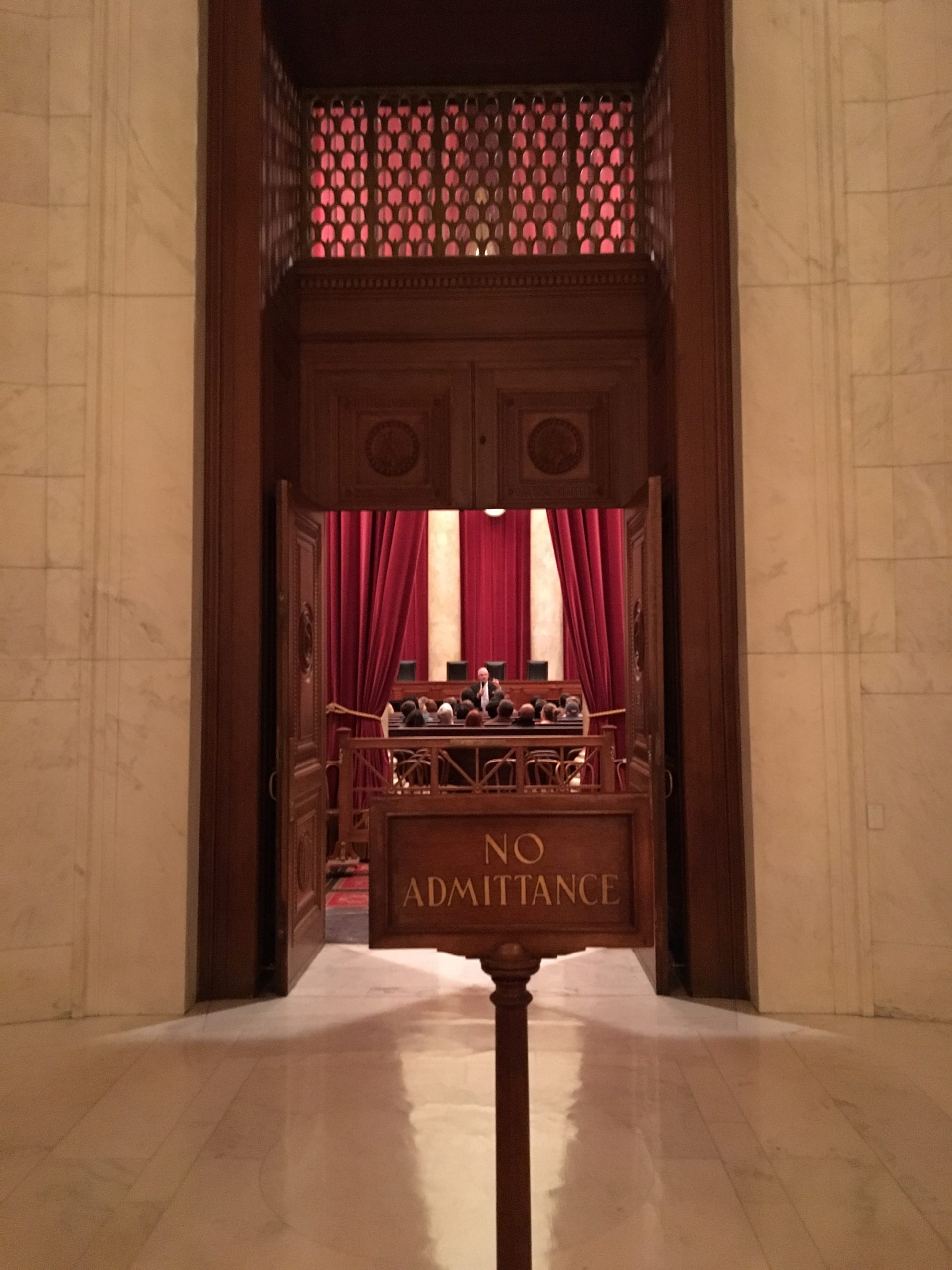
Once again from my in-laws’ home in Potomac, Maryland, here’s Plan Proponent’s Best of 2016 post. With our second year in the bag, we’ll dispense with the formalities and get straight to the Top 10, link by link. In honor of our Supreme Court posts taking-up at least half of our Top 10 most popular posts of 2016, I’m also including pictures from my sleepy, peaceful trip to the Court on Friday right before it closed for 2016. Happy New Year from Stone & Baxter!

Our Top 10 Posts of 2016 (the titles are clickable)

10.  Back to Basics and the 1990s – Does the Discharge Include Alter Ego Claims?

In this post, my colleague Tom discusses In re Lombard Flats, LLC, a Northern District of California case from March 23, 2016. In that decision, the district court held that an alter ego claim against a Chapter 11 debtor that is based on pre-petition facts and claims is included in the bankruptcy discharge by operation of § 1141(d) and § 524(a). As an aside, and perhaps driving the hits, there’s also a fun link between this case and MTV’s “The Real World: San Francisco” (i.e., the Pedro and Puck season).

9.  Delaware Adopts Delaware on Baker Botts Fee-Defense Cost Issue

We continued our 2 years of Baker Botts coverage with this post. Specifically, in the Samson Resources Corporation Chapter 11 bankruptcy case, Delaware’s Judge Sontchi adopted Judge Walrath’s Baker Botts opinion in Delaware’s Boomerang Tube Chapter 11 case regarding fee-defense costs after Baker Botts. See #6, below. As a recap, the Supreme Court held in Baker Botts that professionals employed under § 327(a) may not be reimbursed for fees that they incur in defending their bankruptcy fee applications.

8.  Zero Times Something is Still Zero: Adapting Till to Unsecured Creditors

In this post, we plugged an article that I co-wrote with Richard Gaudet of HDH Advisors, LLC for the American Bankruptcy Institute Journal titled “Zero Times Something is Still Zero: Adapting Till to Unsecured Creditors.” In the article, we discussed how courts might apply Till v. SCS Credit Corp, 541 U.S. 465 (2004) to unsecured creditors. The ABI published the article in its January 2016 edition.

7.  Justice Thomas Crashes a Bankruptcy Breakout Session

I really enjoyed writing this sort of bankruptcy-related recap of the 2016 11th Circuit Judicial Conference, held this year in May in Point Clear, Alabama. The highlight: Eating dinner with one of President Obama’s top choices to replace Justice Scalia on the Supreme Court, but only realizing those degrees of separation after dinner the next morning!

6.  Delaware Rejects Fee-Defense Indemnification in Boomerang Tube Case

More Baker Botts coverage, this time via the In re Boomerang Tube, LLC opinion. In Boomerang Tube, Judge Walrath held that neither § 328(a) of the Bankruptcy Code nor a retention agreement provides a sufficient workaround to the fee-defense prohibitions imposed by the Supreme Court in Baker Botts. See also #9, above.

5a. Supreme Court Clarifies § 523(a)(2)(A)’s “Actual Fraud” in Husky v. Ritz – Part 1

5b. Supreme Court Clarifies § 523(a)(2)(A)’s “Actual Fraud” in Husky v. Ritz – Part 2

In 2 ambitious parts, we blogged about the Supreme Court’s May 2016 7-1 decision in Husky International Electronics Inc. v. Daniel Lee Ritz. The stated issue before the Court: Does the term “actual fraud” in 11 U.S.C. § 523(a)(2)(A) require a misrepresentation? The Court answered “No.” Justice Thomas disagreed. We covered Part A and Part B of the opinion in Part 1 and Part 2 of the post. I forgot how hairy and complex Husky turned out to be.  Tom and I were hitting the blog hard in May! In the Fourth Quarter? Not so much. But, that’s what New Year’s resolutions are for, right?

4.  Application of Till v. SCS Credit Corp. to Unsecured Creditors

In this post, we discussed Judge Laura Grandy’s confirmation opinion in STC, Inc.’s Chapter 11 case. The opinion is noteworthy for 2 reasons. First, it’s an excellent treatise on the Section 1129 confirmation requirements. Second, Judge Grandy cited in her opinion my and Richard’s ABI article (see #8).

3.  Why Does Judge Merrick Garland Hate Bankruptcy Law So Much?

This post provided a lighthearted excuse to talk about President Obama’s nomination of Merrick Garland, Chief Judge of the U.S. Court of Appeals for the D.C. Circuit, to fill Justice Scalia’s vacant seat on the U.S. Supreme Court (after our dinner companion in #7 bowed out). However, almost a year later, this post isn’t aging very well. What a difference an election makes!

2.  Ninth Circuit Follows the Lead on Absolute Priority Rule

To supplement our “APR Case Chart,” Tom blogged about the Zachary v. California Bank & Trust decision. In that case, the Ninth Circuit overturned the Ninth Circuit Bankruptcy Appellate Panel’s prior holding on the absolute priority rule in In re Friedman, 466 B.R. 471 (B.A.P. 9th Cir. 2012). Agreeing with the Fourth, Fifth, Sixth, and Tenth Circuits, the Ninth Circuit held that the absolute priority rule continues to apply in individual Chapter 11 reorganizations, even after the 2005 BAPCPA amendments to the Bankruptcy Code. Oh well…says these debtor lawyers.

And 2016’s winner is…

1. Justice Antonin Scalia’s Bankruptcy Opinions

We’re really proud of this post. It required an incredible amount of work, but it was well worth it. We even had a bankruptcy judge ask us in open court to help his clerk get the article to print correctly! [We really need an IT guy whose name isn’t Dave.] We have our fingers crossed for President Obama’s Trump’s Scalia replacement.

Bonus Post (that my non-lawyer friends actually read): The Chicago Cubs in October: Bankruptcy Edition (easily our top post in the 4th quarter!)

And that’s it for 2016. Thanks for following! We hope you enjoyed our posts.

If you’d like to stay on top of important bankruptcy issues throughout the year, then you can subscribe to Plan Proponent via email here.

And now, a gallery of Supreme Court pictures from Friday’s visit. (I must say, I was somewhat surprised to see a massive Christmas tree in the Great Hall):

Earlier this month, Judge Carey in Delaware weighed in on third-party releases in his opinion confirming the Chapter 11 bankruptcy plan for Abeinsa Holdings, Inc., et al. Back in February, we reviewed Judge Delano’s third-party release decision in HWA Properties, a Middle District of Florida case. In that case, the court refused to permit a third-party release and bar order of a debt which (1) had no connection with the debtor and (2) would have been released under a plan of liquidation. He found that both of those factors resulted in the release being impermissible under the Eleventh Circuit’s Seaside decision. You can read the HWA post here and our post on the ABI Commission’s take on third-party releases here.

The Abeinsa Holdings bankruptcy cases involve the U.S. entities connected with Abengoa, S.A., a Spanish company undergoing a global reorganization. Essentially, the Abeinsa plan consists of four subplans: two liquidating plans and two reorganizing plans. However, they contained two release provisions that are applicable to all of the debtors. First, the debtors proposed to release claims against related companies, the Creditors’ Committee, and certain entities under the Spanish master restructuring agreement, along with their representatives and professionals. Second, and more controversially, the debtors proposed that their creditors release claims against the debtors, debtor-related companies, the Creditors’ Committee, and certain entities under the Spanish master restructuring agreement.

The releases of the debtors, as Judge Carey noted, are “quite broad.” They included the debtors, their parent company, note agents, creditors’ committee and its members, several other committees, and the consenting creditors, as well as the representatives and professionals of each. Judge Carey reminds us that debtors may release claims under Section 1123(b)(3) “if the release is a valid exercise of the debtor’s business judgment, is fair, reasonable and in the best interest of the estate.” In Judge Carey’s review of the proposed debtor releases, he acknowledged that, with the exception of the parent entity and the entities who provided new value in the form of equity contributions, the value provided by the released parties was “imprecise.” However, “it is both relevant and consequential that confirmation of the Plan is a material component, and a condition, of the global restructuring of the Spanish companies.” He also concluded that thee releases were arm’s length agreements and that the Creditor’s Committee and the overwhelming majority of creditors agreed to the debtor releases. Thus, Judge Carey approved the plan’s releases of the debtors and their affiliates.

Judge Carey also addressed the third-party releases under the same standards. However, for third-party releases, the court considered five factors in determining whether the release is fair and equitable:

  1. the identify of interest between the debtor and the third party, such that a suit against the non-debtor is, in essence, a suit against the debtor or will deplete assets of the estate;
  2. substantial contribution by the non-debtor of assets to the reorganization;
  3. the essential nature of the injunction to the reorganization to the extent that, without the injunction, there is little likelihood of success;
  4. an agreement by a substantial majority of creditors to support the injunction, specifically if the impacted class or classes “overwhelmingly” votes to accept the plan; and
  5. provision in the plan for payment of all or substantially all of the claims of the class or classes affected by the injunction.

[Note for bankruptcy practitioners in the 11th Circuit: the Washington Mutual factors cited in Abeinsa Holdings are the same factors used by the 11th Circuit in Seaside Engineering except that the 11th Circuit adds two additional factors: (6) plan provides opportunity for those claimants who choose not to settle to recover in full and (7) court made a record of specific factual findings that support its conclusions.]

Judge Carey was careful to note that the factors are neither exclusive nor conjunctive requirements. Rather, they merely guide the fairness determination.

Ultimately, Judge Carey approved the third-party releases, not because the Plan met each or even most of thee factors, but because Judge Carey found that the creditors that would be bound by the release (some 191 of the 390 ballots submitted) had agreed to be bound. This was because the third-party releases applied to only persons who voted for the Plan and the ballot allowed a person voting to accept the plan to opt-out of the third-party release. Judge Carey found that acceptance of the plan and failure to check the opt-out box constituted consent and, thus, was fair and equitable to the consenting creditors.

As an item of interest and an indication of the likely path of this developing area of the law, the U.S. Trustee, the party objecting to the third-party releases, agreed at the hearing that there were three ways that a creditor could have been deemed to have agreed to a third-party release:

(1) a vote in favor of the plan (although the U.S. Trustee preferred that such a creditor be able to opt-out of the release)
(2) a vote against the plan, but fails to check the opt-out box.
(3) a failure by a creditor to vote on the plan or by an unimpaired creditor’s inability to vote on the plan.

While Judge Carey ultimately approved the plan based on the creditors’ affirmative consent (and gave no indication on the U.S. Trustee’s stance), we will be watching with interest to see whether courts approve the second two options which require implicit, rather than affirmative, consent.

If you’d like to stay on top of these issues and other important Chapter 11 confirmation issues, then you can subscribe to Plan Proponent via email here.

Ordinarily, we would not go back over ground already covered by Bill Rochelle in his excellent Rochelle’s Daily Wire feed. However, we’ll make an exception for anything related to the U.S. Supreme Court’s Baker Botts, L.L.P. v. ASARCO, LLC opinion, an opinion that we’ve covered extensively. In short, Bill pointed all of us to an October 26, 2016 Middle District of Florida decision in In re Stanton wherein esteemed bankruptcy judge Michael G. Williamson held that the Supreme Court’s prohibition on fee-defense costs does not, generally speaking, apply to a fee applicant’s efforts in supplementing a fee application.

Refresher on Baker Botts

As a refresher, a 6-3 Supreme Court held in Baker Botts that professionals employed under § 327(a) of the Bankruptcy Code may not, under § 330(a), recover as compensation fees incurred in defending their bankruptcy fee applications. Application preparation, however, is compensable.

The Facts of Stanton

In re Stanton is a converted Chapter 7 bankruptcy case. The Chapter 7 trustee had employed two lawyers in the case–Herb Donica, generally, and Ed Rice, as special counsel. Donica filed a fee application requesting $748,875 in fees. Those fees covered 2,000 hours in 2 categories: time spent in the main case and time spent pursuing a fraudulent conveyance. In particular, the avoidance action resulted in a $6.5 million settlement recovery for the estate.

However, the United States Trustee (UST) objected to Donica’s fee application. Although the application complied with the requirements of a typical Chapter 7 fee application, the UST insisted that the application satisfy the more rigorous requirements of a Chapter 11 fee application. Specifically, the UST requested more of a breakdown of Donica’s time in the main case; more of a breakdown of the labor as between Donica and Rice (to assess potentially redundant services); and a more detailed narrative of the results that Donica obtained for the bankruptcy estate.

Donica saluted by supplementing his application. Ultimately, the supplement resolved all informational objections. Additionally, Judge Williamson resolved all objections as to duplication of services in Donica’s favor. With that, Donica filed a follow-up application for the time that he spent preparing and then supplementing his fee application. In total, he billed $33,840 for the 2 fee applications. The UST, joined by the IRS, objected to $27,520 of the $33,840 on Baker Botts grounds.

Time Spent Supplementing a Fee Application is Generally Compensable

Judge Williamson held that Donica’s time spent preparing and supplementing the initial fee application was compensable. He reasoned that time spent supplementing a fee application is more akin to the compensable preparation of a fee app than it is to the non-compensable defense of a fee app.

First, Judge Williamson provides a faithful and general summary of the holding in Baker Botts.

Second, he drills down on Justice Thomas’ Baker Botts mechanic’s analogy to resolve the UST’s objection. That is, Judge Thomas, in holding that fee application preparation is a compensable service to the bankruptcy estate, analogized to a mechanic’s bill. As it goes, preparing the mechanic’s bill is a service to a customer because it permits him to understand what services were provided, but arguing with the customer about the bill is not a service.

[We’ve never been big fans of Justice Thomas’ analogy, but Judge Williamson’s reliance on it doesn’t produce a wrong result.]

With that in mind, Judge Williamson concludes that the $27,520 that Donica spent in supplementing his application and responding to the UST’s primarily informational objections was more akin to fee application prep than it was to fee application defense. That is because the additional information better-positioned the UST and other interested parties to understand the services and, if necessary, object to them. Therefore, the supplement benefited the estate–the existence of which benefit is, as Judge Williamson explains, the “touchstone” for determining whether professional fees are recoverable after Baker Botts.

As Judge Williamson viewed it, the parties were not fighting over the amount of the bill as much as they were fighting about whether the bill was detailed enough. Indeed, the parties in Stanton disputed whether Donica’s Chapter 7 fee app even needed to have the additional detail that is required in a Chapter 11 fee app. The UST requested the additional info and the Court agreed that it was a reasonable request. However, Judge Williamson reasoned that whether Donica had provided that information in the initial fee application or had provided it via a supplement, it was all compensable preparation time under Baker Botts.

Finally, Judge Williamson addressed, but ultimately rejected, 2 of the UST’s concerns.

First, he rejected the UST’s fear that the judge’s ruling would cause applicants to file bare-bones fee apps on the understanding that they could always supplement. He rejected that fear because applicants are compensated for all of their reasonable fees in preparing a fee application.

Second, he rejected the UST’s insistence on a bright-line rule that all supplementation is unrecoverable. He rejected that bright line rule because he believed that it might encourage just the opposite: overdisclosure so as to avoid unrecoverable supplementation. If the overdisclosure is still reasonable then it is still recoverable. And if it is unreasonable, then litigation over reasonableness and, thus, expenses would increase.

Conclusion

Last year in our first Baker Botts post, we concluded that fees incurred in correcting and explaining a fee application after a fee application is served likely amount to “defending” the applicant’s fees and, thus, are not recoverable.  However, now that we’ve read Judge Williamson’s opinion, we think he gets it right. As Judge Williamson puts it, better than we can, the “takeaway from the Supreme Court’s decision in Baker Botts is clear: it is the nature of the work–not when it is performed–that determines whether it is compensable.”

Therefore, if the detail provided is necessary for the administration of, and benefits, the estate, then the fees in providing it should be recoverable.

If you’d like to stay on top of this and other important bankruptcy issues, then you can subscribe to Plan Proponent via email here.


CHICAGO, IL – OCTOBER 28: View from center field as the Chicago Cubs play defense during Game Three of the 2016 World Series at Wrigley Field in Chicago, Illinois on October 28, 2016. (Andrew Hancock for ESPN)

The Chicago Cubs are down 1-2 to the Cleveland Indians headed into tonight’s Game 4 of the World Series. In light of the much-talked-about “droughts” that plague both teams, it might not get any more exciting, and it certainly doesn’t get any more pleasant, than October baseball at Wrigley Field on a Saturday night. So what better or worst opportunity to reminisce about that time when the Chicago Cubs, one of Major League Baseball’s most storied franchises, spent a week or two in bankruptcy.

The Cubs and 100+ of Their Closest Friends File Bankruptcy

The year was 2009. Ironically enough, the month was October. The Cubs had just finished their 138th regular season (and 94th season at Wrigley Field) 83-78–just good enough for a 2nd place finish in the NL Central behind the St. Louis Cardinals. And, just a few hours before the Phillies knocked-off the Rockies to take the NLDS, the Cubs made their bankruptcy official. Specifically, on October 12, 2009, the Chicago National League Ball Club, LLC (CNLBC) filed its voluntary Chapter 11 bankruptcy petition in Delaware, making it only the 3rd MLB team, after the Brewers (technically, the Pilots) and then the Orioles, to ever file for bankruptcy–the Texas Rangers followed closely behind in 2010 and then the L.A. Dodgers.

Represented by a gaggle of Chicago’s finest lawyers from Sidley Austin, the Cubs parachuted into the In re Tribune Company bankruptcy when that case was already 2,300+ docket entries old. Tribune Company (the sole owner of CNLBC) and 100+ or so of Tribune’s affiliates had filed their Delaware Chapter 11 cases in late 2008. Tribune’s bankruptcy case already included household names like the Chicago Tribune, the Los Angeles Times, and the WGN TV network. Although the history of the Tribune bankruptcies is too long to tell in this post, they were triggered by what the Wall Street Journal described at the time as a “toxic stew” of “heavy debt, withering advertising declines and the recession” following Tribune’s 2007 decision to go private for $11 billion.

On the one hand, Tribune would need 3 more years and 10,000 more docket entries to emerge from its bankruptcies. On the other hand, the Cubs’ very well-orchestrated and rather perfunctory filing needed just 2 weeks. Indeed, far from an “October Surprise,” the Cubs’ bankruptcy case was merely the final step in a sales process that started with Tribune’s 3 year marketing campaign. In April of 2007, Tribune announced that it would sell the team and began soliciting bids. There was no shortage of interest in one of sports’ most valuable teams. By late 2008, with Tribune’s sprawling and contentious bankruptcy well underway, the list of potential bidders had narrowed to 3. And, in consultation with the Unsecured Creditors Committee and the Lenders Steering Committee in Tribune’s case, Tribune agreed to sell the Cubs and a host of related Cubs assets to the Ricketts family of TD Ameritrade fame.

[In the category of trivia, last year we placed a spectacular Jackson Hole, Wyoming ranch in a Chapter 11 in the Northern District of Georgia. The ranch claims Joe Ricketts as a neighbor.]

Judge Carey Plays Matchmaker for the Sale of All Sales

On the petition date, and before the Cubs had even filed their Schedules and the like, the Cubs filed a 464 page motion to sell. In the sale motion, the Cubs asked Judge Carey to bless a transaction which had all but already closed. As evidenced by the 100s of pages of documents attached to the sale motion, the transactions proposed in the sale motion had already received preliminary approval on September 24, 2009 in Tribune’s main case and closed in escrow on October 9, 2009. The Cubs just needed Judge Carey’s blessing so that the Cubs could untangle itself from Tribune’s bankruptcy, monetize the assets and position them for sale, and break escrow 2 weeks later.

The bankruptcy sale of the Cubs is most interesting for what was sold and somewhat interesting for how the parties structured and funded the sale.

The Assets

As for the assets, the Cubs proposed the sale of the “Cubs Business” which spanned approximately 5 Tribune subsidiaries (including CNLBC, the only Cubs-related subsidiary that had filed). The Cubs Business, valued by the parties at $845 million, included the Cubs’ MLB, spring training, and Dominican baseball operations (i.e., the Cubs franchise); Wrigley Field (!) and its related parking lots; a 25% interest in Comcast SportsNet Chicago; various radio and TV broadcast rights; intellectual property owned by the Cubs (which is literally and exhaustively depicted in the Cubs’ bankruptcy schedules); accounts receivable, and goodwill related to the Cubs Business.

The Structure

As for the structure, the Cubs’ lawyers could not have chosen a more understated title for the transaction: the “Proposed Business Combination.” In Plain English, the transaction contemplated that the Cubs Entities would contribute all of the above assets, free and clear of all liens, claims, and encumbrances, to Ricketts Acquisition, LLC (RAL), a joint venture. In return, the Cubs Entities would receive, after various post-closing adjustments, approximately $740 million in cash from an $840 million special distribution and a collective 5% stake in RAL. Additionally, RAL was to assume almost all of the liabilities of the Cubs Entities (except Tribune-related guaranties), including those owing to players, employees, and officers in the Cubs Business.

The Funding

To fund the sale, the Ricketts family, backed by a guarantee from the Joe and Marlene Rickets Grandchildren’s Trust, arranged for $450 million of senior debt, $249 million of subordinated debt, and $150 million of equity financing to RAL, for a total package of $849 million, which had already funded in escrow as of the date of the sale motion. On October 6, 2009, a week prior to the filing of the sale motion, Major League Baseball unanimously approved the transfer of control of the Cubs Franchise to the Ricketts. The Rickets and the Cubs Entities retained calls and puts, respectively, for the 5% stake in RAL, with the calls being available from 2018-2024 and the puts being available from 2021-2027.

The parties contemplated that the Special Distribution would be $828 million with a $15 million carve-out for indemnity obligations. After various post-closing adjustments, the parties estimated that the Cubs Entities would receive cash of about $740 million for distributions to an overwhelming majority of the Cubs’ creditors (other than Tribune creditors asserting guaranties).

Conclusion

Concluding that no further due diligence or marketing was necessary, and in consideration of the extraordinary efforts that the parties had gone to to negotiate the deal with the Ricketts family and obtain MLB approval and that notice had been sent to over 11,000 creditors and, Judge Carey approved the sale motion on October 14, 2009. The sale closed on October 27, 2009.

Notably, Theo Epstein, a lawyer no less, joined the Cubs as President of Baseball Operations exactly 2 years to the day after the Cubs filed their bankruptcy. Perhaps the Ricketts would have paid more had they known that the “curse killer” would bring the Cubs this far so quickly. Anyway, we’ll leave it to the sports bloggers to fill you in on what happened following the 2009 sale.

But, if tonight’s game gets too raucous or exciting, then we encourage you to dive into the Chicago Cubs’ bankruptcy schedules (part 1 and part 2), statement of financial affairs, and the sale motion. In those pleadings, you’ll get an inside view of the Chicago Cubs, at least as an asset and as a business, a view that only bankruptcy can provide.

If you’d like to stay on top of other important bankruptcy issues, then you can subscribe to Plan Proponent via email here.
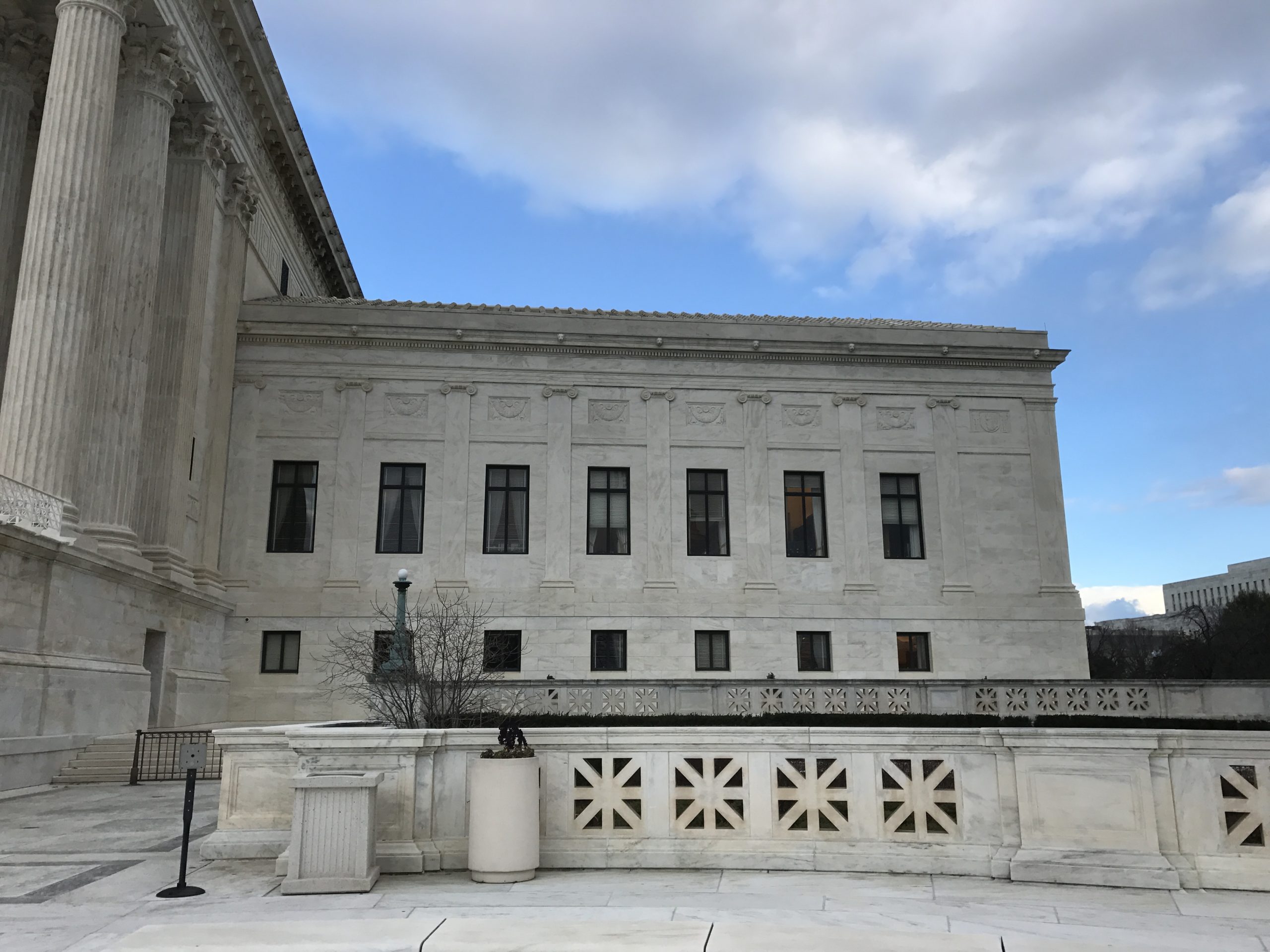
americanidolBack in April, AOG Entertainment and 40+ of its favorite affiliates (collectively, “Core“) filed Chapter 11 cases in the Southern District of New York. Those cases are best known as encompassing the production companies for the “American Idol” and “So You Think You Can Dance” television shows. Recently, Law360 reported that “American Idol Producer Cleared for Exit From Chapter 11.” We can’t afford Law360 so we dug-up the pleadings. Ultimately, Judge Bernstein confirmed Core’s amend Chapter 11 plan after the parties settled the last objection.

However, the objection raised 2 confirmation issues that are worth highlighting:

(1) To which plan classes does the “absolute priority rule” apply?

(2) Who has standing to make plan objections?

Confirmation Fight  

Core was set for a confirmation hearing on its amended plan with all objections resolved but one: Simon Fuller’s objection. Not to be confused with Simon Cowell (also of American Idol fame), Simon Fuller created “American Idol” and “So You Think You Dance.” Over the years, Fuller had served in various high-profile creator, producer, and consulting roles for those shows. In the bankruptcy, Fuller claimed that 19 Entertainment Limited, one of the debtors, owed him at least $10 million under a consulting agreement through which he continued to serve those shows and which provided him lucrative profit-sharing entitlements. Core rejected the consulting agreement under § 365.

simon-fuller-press-2016-billboard-650Unhappy with the proposed plan, Fuller engaged McDermott Will & Emery to contest confirmation. He sought discovery under Rule 2004, sought to extend certain challenge deadlines in the Debtors’ DIP Financing Order, and objected to the plan on various grounds, including the ground that it violated the absolute priority rule (the “APR“). His theory: Discovery would reveal info that would permit him to challenge certain pre-petition loans t0 19 Entertainment. In turn, a successful challenge of those loans would defeat the plan’s proposal to distribute equity in 19 Entertainment to those pre-petition lenders. Fuller characterized the challenge as an APR challenge. Frankly, the objection is rather convoluted. In plain English, “confirmation would be premature because my investigation might reveal plan defects.”

Judge Bernstein denied Fuller’s 2004 motion and his motion to extend the DIP Financing Order’s challenge deadline, mainly because Fuller had “sat on his hands” in pursuing that relief. Additionally, Judge Bernstein questioned whether Fuller’s investigation would turn-up anything, particularly given that the Unsecured Creditors Committee had passed on those issues after investigating them.

Core filed a 66 page brief in support of confirmation and, in the process, addressed Fuller’s confirmation objection, both as to mootness and the APR. With respect to mootness, Core argued that Judge Bernstein’s denial of the 2004 motion mooted much of Fuller’s objection. Nevertheless, Core still addressed the absolute priority rule issue.

Overview of the Absolute Priority Rule

As we’ve blogged before, the absolute priority rule is relevant in Chapter 11 cases, like the Core cases, when the debtor attempts to “cram down” a Chapter 11 plan over the objection of dissenting unsecured creditors. If the debtor satisfies all of the other confirmation requirements, then a debtor may cram down by satisfying two additional requirements: (1) the plan must not discriminate unfairly against the objecting class of creditors and (2) the plan must be “fair and equitable” under 11 U.S.C. § 1129(b)(1).

To be fair and equitable, a plan must satisfy the APR, as codified in § 1129(b)(2)(B)(ii):

With respect to a class of unsecured claims—the holder of any claim or interest that is junior to the claims of such class will not receive or retain under the plan on account of such junior claim or interest any property…

Dating back to the 19th century, the APR prevents senior creditors and equity holders from imposing unfair terms on unsecured creditors. The case of In re Arnold, 471 B.R. 578 (Bankr. C.D. Cal. 2012) provides a treatise-worthy discussion of the APR’s history in bankruptcy.

Simply put, the APR requires that a dissenting class of unsecured creditors be provided for in full before any junior class can receive or retain any property under a plan.

Absolute Priority Rule Reminders

Again, it appears that the parties settled Fuller’s objection. Therefore, Judge Bernstein’s 58 page confirmation order did not need to address it.

However, Core’s brief raises 2 APR issues that are worth noting.

Issue 1: To which plan classes does the absolute priority rule apply?

Core submitted that it is “well-settled” that the § 1129(b) cramdown provisions “do not apply to impaired classes of claims or interests that have voted to accept a plan.” First, Core cites 11 U.S.C. § 1129(b)(1). That subsection provides that the fair and equitable and unfair discrimination requirements only apply “with respect to each class of claims or interests that is impaired under, and has not accepted, the Plan.” Second, they point to In re Adelphia Commc’ns Corp., 544 F.3d 420, 426 (2d Cir. 2008).

In that case, the Second Circuit held that a “plan need not satisfy the Absolute Priority Rule so long as any class adversely affected by the variation accepts the plan.” Finally, Core relies on Norwest Bank Worthington v. Ahlers, 485 U.S. 197, 207 (1988). In that case, the Supreme Court explained that it’s “up to the creditors . . . to accept or reject a reorganization plan which fails to provide them adequate protection or fails to honor the absolute priority rule, 11 U.S.C. § 1126.”

Because Fuller’s claim was calculated in Class 5 and Class 5, among other classes, voted “overwhelmingly” to accept the plan (97.54% in amount and 98.61% in number), the APR did not apply to Fuller’s Class 5. Therefore, the plan did not violate the APR as to Class 5.

The reminder: The APR is only a valid objection as to an impaired, rejecting class.

Issue 2: Who has standing to make plan objections?

According to Core, the only classes to which cramdown applied were Class 7 (subordinated claims) and Class 8 (equity interests). Cramdown applied to those classes because creditors or interest holders in those classes would receive no distributions under the plan and, thus, were deemed to reject it. However, Core argued that Fuller did not hold a claim in either of those classes and, thus, had “no standing to object to treatment provided to such classes.”

In support, Core relies on 2 cases: In re Quigley Co., 391 B.R. 695, 706 (Bankr. S.D.N.Y. 2008) and In re Johns Manville Corp., 68 B.R. 618, 623 (Bankr. S.D.N.Y. 1986).

In Quigley, the court held that a party cannot “object to the Plan based on how it affects the rights of third parties” and “[i]ssues relating to classification, treatment, solicitation and voting come immediately to mind” as issues that may be raised only by the affected creditors. More directly, the court held in Manville that “no party may successfully prevent the confirmation of a plan by raising the rights of third parties who do not object to confirmation.”

The reminder: A creditor only has standing to raise confirmation objections that impact its rights.

Conclusion

At first glance, Core’s analysis and citations appear sound:

1. The absolute priority rule does not apply to an impaired class that has voted to accept a plan.

2. A creditor objecting to confirmation is limited to confirmation objections that impact its rights or objections already raised by affected creditors.

Nevertheless, I’ll probably ask my colleague Tom to go behind the debtors and check their work on these 2 issues.

On the one hand, these are debtor-friendly rules. Therefore, as a debtor’s lawyer, I should hope that they’re correct. On the other hand, I’m not so sure about the second rule. If it’s true, then does that mean that the United States Trustee, for example, can’t raise the absolute priority rule on behalf of a class of creditors who rejected, but failed to object? I tend to think that any party-in-interest can raise a valid confirmation objection. Is there a different rule for creditors versus gatekeepers like the UST? We’ll let you know…

If you’d like to stay on top of these issues and other important Chapter 11 confirmation issues, then you can subscribe to Plan Proponent via email here.

alliedgold

Back in July, we touched on the doctrine of equitable mootness in the context of a bankruptcy settlement agreement. Last week, the Delaware District Court employed equitable mootness in its opinion dismissing a plan confirmation appeal in the Allied Nevada Gold Corp. bankruptcy. Unless an appellant can raise a valid confirmation appeal before substantial consummation of the Chapter 11 plan, equitable mootness favors dismissal.

Background

Allied Nevada Gold Corp. and some of its affiliates filed Chapter 11 bankruptcies in March of 2015. Allied is a Nevada-based gold and silver producer. Allied had debts of around $690 million, with $340 million in secured debt and $350 million in unsecured debt. Throughout the cases, the equity committee and/or its individual members objected to Allied’s proposed reorganization. Their gripe was simple: They weren’t happy with a mere 10% equity stake in the reorganized debtor. They were convinced that the struggling company was worth more and, thus, that they were entitled to a greater distribution.

Although they were long on objections and other obstructive tactics, the shareholders were short on evidence. It didn’t help matters that some of them challenged deals that their committee had already consented to or sought relief (e.g., appointment of an examiner) that simply wasn’t appropriate (and even sought that same relief again after being told “No” the first time). Therefore, the Court adopted Allied’s enterprise valuation of between $200 and $300 million, agreed that equity was out of the money by at least $350 million, and confirmed Allied’s twice-amended plan as being in everyone’s best interest.

Plan consummation kicked-off on October 22, 2015 and triggered at least 9 post-confirmation transactions or events, including repayment of certain pre-petition debts; lease rejections; lien eliminations; organization of the new debtor and its board; $126.7 million in senior borrowing; $95 million in junior borrowing; issuance of new common stock to certain unsecured creditors; issuance of warrants to cancelled stockholders; and $1.8 million in administrative expense and cure claim payments.

Nevertheless, the equity committee and some of its individual members, all on a pro se basis, insisted on appealing plan confirmation to the District Court.

Decision

In response, Allied argued that the appeal should be dismissed by reason of equitable mootness. That is, the appeal should, as articulated last year by the Third Circuit in In re Tribune Media., be dismissed because deciding the appeal would “undermine the finality and reliability of consummated plans of reorganization.” In turn, Tribune lays out the burden and the factors for employing equitable mootness, at least in the Third Circuit.

Standard for Evaluating Equitable Mootness

As for the burden, the party raising equitable mootness has the burden of “overcoming the strong presumption” that confirmation appeals should be decided, even following substantial consummation.

As for the factors, the party raising equitable mootness will satisfy its burden if it establishes that (1) there’s been substantial consummation of the plan under 11 U.S.C. § 1101(2) and (2) ruling for the other party will “fatally scramble” the plan and/or “significantly harm third parties who justifiably relied on confirmation.” The Third Circuit’s approach is consistent with the Eleventh Circuit approach that we highlighted in July. See In re Club Assocs., 956 F 2d. 1065 (11th Cir. 1992) (asking whether the reorganization plan has been so substantially consummated that effective relief is no longer available).

Application of Equitable Mootness in Allied

Unfortunately for the equity holders, they had everything going against them on the equitable mootness factors. First, a finding of substantial consummation was not even a close call for the District Court. Filtering the 9 post-confirmation events through the language of § 1101(2), there was no question that the Allied plan was substantially consummated. Allied had transferred substantially all of its property under the plan. Allied’s successor had assumed the assets, management, and business of Allied. And plan distributions had commenced in material part.

Second, siding with the equity holders would have caused the plan to collapse. Similar to the JMC Memphis case, the Court emphasizes that the appellants had failed to obtain a stay pending appeal. “Indeed, the absence of a stay is so critical to the analysis that even the unsuccessful pursuit of a stay may favor a finding of equitable mootness.” That is because an un-stayed consummation can become a runaway train that is difficult to stop without prejudice. On the one hand, the Court emphasizes that the confirmed plan involved intricate and complex transactions; reflected a long-negotiated compromise between a host of constituencies (including the equity committee itself); and resulted in reasonable reliance by innocent third parties who were not before the Court on appeal. On the other hand, the Court emphasizes that respecting appellants’ gripe that the Bankruptcy Court botched the valuation would “topple” those delicate balances and compromises.

Conclusion

In light of those considerations, public policy demanded finality and the Court dismissed the appeals. The result speaks for itself so clearly that we’ll leave it at that.

UPDATE: On October 3, 2016, Brian Tuttle, one of the pro se shareholders, appealed the decision to the Third Circuit. We’ll monitor that appeal for any updates.

If you’d like to stay on top of this issue and other important Chapter 11 confirmation issues, then you can subscribe to Plan Proponent via email here.