The U.S. Supreme Court heard oral argument yesterday in Lamar, Archer & Cofrin, LLP v. Appling, a case from the 11th Circuit regarding the bankruptcy dischargeability exceptions in 11 U.S.C.  § 523(a)(2). Locally, Appling is important because it originated across the street–literally–in Chief Bankruptcy Judge James P. Smith’s courtroom here in the Middle District of Georgia. Our firm is also proud to call Judge Smith an alum. Nationally, even in a week filled with other “blockbuster” opinions and argumentsAppling is important because it highlights a split between the 11th and 4th Circuits, on the one hand, and the 5th, 8th, and 10th Circuits, on the other hand.

Basically, what happens if a debtor lies to a creditor about a particular asset, obtains money or services based on that lie, and then files bankruptcy–should the debt to that creditor be discharged? If you agree with Judge Smith, then a lie about a single asset is not a lie “respecting” the debtor’s “financial condition.” Thus, that lie falls under § 523(a)(2)(A) and may serve as a dischargeability bar. If you agree with the 11th Circuit, then a lie about a single asset can be a lie “respecting” the debtor’s “financial condition.” Thus, that lie falls under § 523(a)(2)(B) and may only serve as a dischargeability bar if, among other things, the lie is in writing.

Those are the issues that the Supreme Court grappled with yesterday, with Gregory Garre arguing for Lamar, Archer & Cofrin, LLP, Paul Hughes arguing for Appling, and Jeffrey Sandberg arguing for the Department of Justice, as amicus curiae, in support of Appling.

As with any bankruptcy issue that reaches the Supreme Court, much has already been written about Appling. Thus, we’ll simply point you to the pertinent links:

Supreme Court Docket Page

Bankruptcy Court Decision

Eleventh Circuit Decision

Oral Argument Transcript

Bill Rochelle’s Hot Take

We’ll be on the lookout for the final decision.

If you’d like to stay on top of this and other important bankruptcy issues, then you can subscribe to Plan Proponent via email here.

As we posted about back in November, the Supreme Court granted cert in the In re The Village at Lakeridge, LLC case. We’ve been following that case since March of 2016 regarding insider status in Chapter 11 bankruptcy cases. Originally, the Ninth Circuit Court of Appeals took up the broader issue of how bankruptcy courts should determine “non-statutory insider” status. Last year, the Supreme Court took on the narrow issue of whether the standard of review for determining insider status should be de novo review (as used by the 3rd, 7th, and 10th Circuits) or clearly erroneous review (as used by the 9th Circuit). Today, the Court, in a unanimous decision, ruled that the standard of review for that determination is a clearly erroneous standard. You can read the decision here. In particular, we found very interesting Justice Kagan’s discussion of “mixed questions of law and fact,” a phrase that my senior partner loathes. We’ll be back with more detailed coverage, likely long after you’ve read all about it from other sources!

If you’d like to stay on top of this and other important bankruptcy issues, then you can subscribe to Plan Proponent via email here.


Once again from my in-laws’ home in Potomac, Maryland, here’s Plan Proponent’s Best of 2017 post, a link by link Top 10 of our third year of blogging–although my wife just asked, in rather savage fashion, “Did you even have 10 posts this year?” Wow. (We had 11 posts, so one unlucky post about tax avoidance in Chapter 11 plans didn’t make the cut! Shocker.)

In lieu of my usual year-end pictures from D.C., we leave you with Plan Proponent’s first and only homemade “political cartoon” from last February and inspired by Justice Gorsuch’s In re Haberman opinion. What a year for judges!

Happy New Year from Stone & Baxter!

Our Top 10 Posts of 2017 (the titles are clickable)

10.  Insider Status Travels With Claim? SCOTUS Now Has the Case (Sort Of)

In this post, a sort of follow-up to Tom’s post from 2016, we linked over to oral argument from the day before, wherein the Supreme Court took up In re The Village at Lakeridge, LLC.  Specifically, the Court is still considering whether, on appeal, the standard of review for determining insider status should be de novo review (as used by the 3rd, 7th, and 10th Circuits) or clearly erroneous review (as used by the 9th Circuit).

The only thing to add since that post is a link to the now available oral argument audio: click here

9.  The Los Angeles Dodgers in October: Bankruptcy Edition

Our World Series posts would likely win out each year if they weren’t posted so relatively late in the year. The posts that our families and friends enjoy are our favorite posts.

8.  Preserving Post-Confirmation Causes of Action – Part 2

7.  Preserving Post-Confirmation Causes of Action – Part 1

In these two posts, we explored a novel question of our asking: Does Bell Atlantic Corp. v. Twombly bear on the issue of preserving post-confirmation causes of action in Chapter 11 bankruptcy cases? Ultimately, we concluded that Twombly shouldn’t apply in preserving causes of action. However, framing the preservation issue in terms of Twombly helped illuminate the preservation issue.

6.  Establishing Till-compliant Interest Rates in Chapter 11 without an Expert

In this post, we shamelessly promoted my and Richard Gaudet’s Association of Insolvency & Restructuring Advisors article titled “Till Realized: Calculating Objective Chapter 11 Cramdown Rates without Expert Testimony.” The focus of the article is on the application of the U.S. Supreme Court case of Till v. SCS Credit Corp. (2004) to Chapter 11 debtors who can’t afford to hire an interest rate expertSpecifically, is it possible for a debtor to establish a Till-compliant cramdown interest rate objectively and economically, all without the necessity of engaging an expert witness? We think so.

5.  Revisiting David Cassidy and the Absolute Priority Rule

Our second blog post on February 16, 2015 was about David Cassidy and the absolute priority rule (APR) in individual cases. Cassidy had filed an individual Chapter 11 case in the Southern District of Florida in early 2015. At the time, we thought that his case might be a good test case for the (diminishing) split of authority regarding the APR. On the one hand, our 2015 post is our second most popular post ever. On the other hand, his case didn’t turn out to be a good test case–that, and an update to our Absolute Priority Rule Chart, was the subject of this February 2017 post.

As an update, it appears that the bankruptcy court approved Cassidy’s January disclosure statement in July. Two ballots were cast–one in favor of the plan by American Express and one against by Rodier & Rodier, P.A., Cassidy’s non-bankruptcy lawyers who claimed to be owed $122K. Rodier & Rodier also objected to the plan. It’s basically an APR objection without being captioned as such. The bankruptcy court took-up confirmation on September 27 and, ultimately, denied confirmation and dismissed the case with prejudice.

And sadly, David Cassidy died last month of liver failure.

4.  Administrative Expenses under DIP Financing: The Joke’s On You

I’m not sure how Tom’s post about DIP financing and administrative fees beat out David Cassidy, but it did. In this post, we discussed Delaware Bankruptcy Judge Sontchi’s decision in the Molycorp case wherein he ruled that a professional fees cap in a DIP financing order was ineffective to cap an $8 million committee fees claim once Molycorp confirmed its plan.

3.  Judge Neil Gorsuch’s Bankruptcy Opinions – Part 2

2.  Judge Neil Gorsuch’s Bankruptcy Opinions – Part 1

We enjoyed blogging about Justice Scalia and Judge Merrick Garland last year. Likewise, we enjoyed blogging this year about Judge (now Justice) Gorsuch and what his nomination could mean for bankruptcy cases. Justice Gorsuch can really turn a phrase, even in bankruptcy opinions, and we captured the fun stuff in two parts.

And 2017’s winner is…

1.  Book Excerpt: A Southern Lawyer’s Lunch with Harvey Miller 

We’re really proud of this post. It barely had four months to get a clicks foothold and it still won out rather easily. And other than our having good taste, we can’t even take credit for it. Rather, it’s an excerpt from Doug Ford’s (a commercial bankruptcy attorney in Atlanta at Quirk & Quirk, LLC) book I Do My Own Stunts: Finding My Way as an Attorney. Even my mom approves.

And that’s it for 2017. Thanks for following!

If you’d like to stay on top of important bankruptcy issues throughout the year, then you can subscribe to Plan Proponent via email here.

Back in March of 2016, Tom wrote about In re The Village at Lakeridge, LLC. In that case, the Ninth Circuit Court of Appeals concluded that when MPB, the debtor’s sole member and a “statutory insider,” sold its claim to Dr. Rabkin, who was not an insider, Dr. Rabkin did not inherit MPB’s insider status, per se. Lakeridge is now at the Supreme Court. The Court heard oral argument yesterday.

To be sure, the issue before the Supreme Court is more limited. Specifically, the Court is considering whether, on appeal, the standard of review for determining insider status should be de novo review (as used by the 3rd, 7th, and 10th Circuits) or clearly erroneous review (as used by the 9th Circuit). Unfortunately or thankfully, Ronald Mann at SCOTUSblog beat us to it minutes ago with some excellent coverage of yesterdays’ argument. Thus, here you go:

We’ll continue to keep an eye on Village at Lakeridge.

If you’d like to stay on top of this and other important bankruptcy issues, then you can subscribe to Plan Proponent via email here.
[Note: If you’re an email subscriber, then we highly recommend that you click the post title in the emails and read the posts directly on the website. They’re easier to read that way and embedded videos–like last night’s Vin Scully/Kirk Gibson video–will be clickable. Sorry for any inconvenience. Thanks for subscribing!]


The Los Angeles Dodgers are down 2-3 to the Houston Astros headed into tonight’s Game 6 of the World Series. And after a wild, 12 to 13 extra innings slugfest on Sunday, we figured we’d do what we do best: simmer the anticipation and the excitement with a bankruptcy post. Last year, we wrote about the formerly bankrupt Chicago Cubs when they were down 1-2 against the Cleveland Indians. The Cubs went on to win the Series and end a 108 season drought. In this Halloween post, we’ll try and work the same positive voodoo on the Dodgers, another storied MLB franchise with the bankruptcy asterisk on its record.

A Summer Road Trip to Delaware

On June 27, 2011, Los Angeles Dodgers, LLC, along with four of its affiliates, filed its voluntary Chapter 11 bankruptcy petition in Delaware, making the Dodgers the 5th MLB team ever to seek bankruptcy protection. Barely three months into their 54th season in Los Angeles, the Dodgers were 36-44, placing them second to last in the NL West. They were represented by the ever-present Young Conaway out of Delaware and the now defunct and bankrupt Dewey & LeBoeuf out of LA.

Whereas the Cubs were in and out of bankruptcy in two weeks via a sale, the Dodgers bankruptcy, a slow cook over 2,149 docket entries, was a more traditional restructuring endeavor. They had payroll problems, attendance problems, a $3 billion Fox TV contract problem with MLB, “failure to reach the playoffs” problems, and ownership problems, among others. Indeed, the bankruptcy was just as much about then Dodgers owner Frank McCourt and his divorce as it was about the Dodgers.

We’ll get to the punchline–an April 2012 sale to Guggenheim Partners and Magic Johnson for $2.3 billion–shortly, but here are the essential pleadings:

As long as you promise to come back to our post, Weil’s excellent Five Year Anniversary Dodgers post is also worth a click. In particular, it provides a good overview of the $150 million DIP financing and the MLB squabbles leading-up to the sale.

Browsing the Dodgers’ “40 Largest” and Schedules

Of course, sports bankruptcies are “fun” because everything should become public. Mainly in the category of trivia, then:

From their consolidated list of 40 Largest Unsecured Creditors:

  • Their largest unsecured creditor in 2011 was Manny Ramirez for $21 million.
  • Their second largest unsecured creditor was Andruw Jones (?!) for $11 million.
  • They owed $332,418 to Continental Airlines’ Charter Department.
  • They owed $316,243 on their Bank of America credit card.
  • Matt Kemp, now a part of my Braves family, was only their 27th largest unsecured creditor at $216,944.
  • Vin Scully, the legendary announcer himself, made the list at #32 for $152,778.
  • Finally, they had about $150,000 in “trade debt” owing to Deloitte and to Convington & Burling.

From their various Schedules and Statements of Financial Affairs:

  • LA Dodgers, LLC: $78M in assets and $4.7M in liabilities, but lots “Unknown” entries
  • LA Real Estate, LLC: $157M for Dodger Stadium
  • 29 page catalog of baseball memorabilia going back to 1899 w/ over 1,714 items
  • 128 pages of copyrights, trademarks, and other IP assets (mainly international)
  • 49 pages of unsecured creditors in the main case
  • $265M and $281M in revenues in ’10 and ’09
  • At least 28 pending lawsuits and the like as of the petition date
  • Each Debtor listed as a potential liability the Bryan Stow lawsuit
  • Apparently, the Dodgers suffered a minor insurance casualty during the filming of Moneyball
  • They itemized part of Gary Cypres’ infamous Dodgers collection as “property held for another” (including a $95K Koufax jersey)
  • Apparently, they’re a big Best Buy gift card purchaser!

In the 90 days prior to filing, they paid 257 creditors a total of $15.76 million in transactions that exceeded the reporting threshold, including $922K to Continental Airlines; $259K to the Dominican Republic’s National Baseball Academy; $9K at California Pizza Kitchen; $298K to the Hampton Inn & Suites in Glendale, Arizona; $457K to the LA Dept. of Water & Power; $1.1 million to Levy Restaurants (stadium concessions); $2.76 million to MLB; and $66K to Pyro Events for fireworks (of course).

In the 1 year prior to filing, they paid 8 insiders a total of $29.86 million in transactions, including $22 million in stadium rent to McCourt’s Blue Land Co., LLC; $3.81 million to current employees versus $2.09 million to former employees; $5K for 10 Opening Day dugout seats for Matt Kemp versus $5K for Opening Day tickets for military appreciation; and $5,630 in Red Sox tickets at Fenway for the McCourt family and guests!

From the 2,149 docket entries:

  • There were at least 61 pro hac attorney admissions.
  • Dewey & LeBoeuf’s final compensation as Debtors’ primary counsel: $12.94 million
  • Young & Conaway’s final compensation as Debtors’ local counsel: $1.41 million
  • Morrison & Foerster’s final compensation for the Creditors Committee: $1.53 million

Dodgers Sold to Guggenheim Partners and Magic Johnson

Although the Plan and Confirmation Order spell it out in more detail, McCourt had until April 30, 2012, under the Dodgers’ MLB settlement, to sell the Dodgers and related assets. [He also had until that date to pay his ex-wife, Jamie McCourt, a $131 million divorce settlement in one of the most expensive and public divorces in California history.] To that end, Blackstone Advisory Partners assisted the Dodgers in locating the highest bid for 100% of the equity interests in the Dodgers or a sale of all of the Dodgers’ assets.

Ultimately, Guggenheim Baseball Management, LLC, an entity led by Guggenheim Partners and Lakers legend Magic Johnson, purchased the Dodgers for $2.3 billion (consisting of $2 billion for the team and the stadium and another $300 million for surrounding land and parking lots). At the time, and likely still, it was the largest sports team sale in history–over 2.5 times the $845 million that the Ricketts paid for Cubs in 2009 and almost 2 times the $1.1 billion that Steve Ross paid for the Miami Dolphins. In terms of total deal value, the Dodgers reportedly increased in value by over $2 billion in eight years compared to the $371 million or so that McCourt paid Newscorp for the team in 2004. Finally, under the Plan, all creditors were paid in full and equity interest holders received the net proceeds. Not a bad outcome, and one that earned Dewey a $500,000 success fee on $12.44 million in fees.

Conclusion

Hopefully, this post makes for some entertaining clicks during tonight’s commercial breaks, for lawyers and non-lawyers alike. Be on the lookout for next October’s Bankruptcy Edition wherein we discuss the 2018 World Series. It will surely involve the formerly bankruptcy Texas Rangers or Baltimore Orioles! Until then, and especially if this post doesn’t keep the Dodgers in the Series, we’ll leave you with Vin Scully’s classic call of Kirk Gibson’s equally classic ’88 World Series walk-off homer. Enjoy:

If you’d like to stay on top of other important bankruptcy issues, then you can subscribe to Plan Proponent via email here.

(Photo Credit: Marilynn K. Yee/The New York Times)

On my drive home from New Year’s in D.C., I learned that my buddy Doug Ford, a commercial bankruptcy attorney in Atlanta at Quirk & Quirk, LLC, had self-published his book I Do My Own Stunts: Finding My Way as an Attorney. I’m not sure how he found time to write it, but it’s an excellent read, especially Doug’s “backstory” as I’ll call it. This Atlanta-raised, Vanderbilt-educated French major’s path to law practice is fascinating to say the least. With that, we thought our readers might enjoy the following excerpt from Stunts about Doug’s 2014 Manhattan lunch with the late Harvey Miller, the architect of modern Chapter 11 practice. So here it goes, Southern debtor collector meets bankruptcy deity. Enjoy!

Excerpt from I Do My Own Stunts: Finding My Way as an Attorney (2016) by Douglas D. Ford, available on Kindle at Amazon.com:

In 2014, I had lunch with Harvey Miller, the well-known restructuring attorney, in Midtown Manhattan. He is since deceased.

Some months previous to our lunch, Mr. Miller had headlined the regional bankruptcy conference here in Atlanta, where he spoke on the current inadequacies of business reorganization law. Only someone like he could have enlivened such a topic, which he did, explaining how he thought the financial system is still at risk. When the speech was over and the program took a break, I approached him, like a moth to a flame, in order to propose a casual meeting in New York, where we were planning to visit. As I figured, all he could do was say he was too busy or ignore me, so I took a chance.

I am a commercial debt collector, involved in bankruptcy out of necessity now — no other young attorney in my firm wanted to learn it. Our matters are relatively smaller and, although sometimes complex, do not involve mortgage-backed securities or airline pilot contracts, to my knowledge. What, then, could I possibly discuss with Mr. Miller, debtor’s lead counsel in the Lehman Brothers and Delta Air Lines Chapter 11 cases, among others?

Mr. Miller accepted my proposal. That summer, I deposited my wife and daughter one morning at the Central Park Zoo and went with trepidation past the William T. Sherman Monument, feeling my Southern-ness, my anywhere-but-New-York-ness. Standing outside a nice Italian place on E. 59th in the shadow of the General Motors building at the appointed time, I saw a tall figure crossing over the street, headed my way.

The first thing Mr. Miller said was that he was watching crude oil, how much they were extracting. A prescient remark, given the recent collapse in oil. I fumbled around, told him of my love of language, offering that France might be the most fabulous trip. Italy, he quickly countered. He was cultured. If I loved the arts, he asked, why was I a lawyer? It is stimulating work, I answered, which I guess is true. He knew about Georgia, too. He told how he had once warned an Atlanta real estate investment outfit about a potential takeover threat, which later materialized. These Southern gentlemen did not fully believe that private equity out of Chicago, given an opening, would really push them out of their own operation — they were doing the “dance of death,” Mr. Miller called it, striking a macabre pose. He understood the power of leverage on a national scale, but his personal manner did not intimidate.

He knew rejection early in his career. As a Jew, he did not select bankruptcy once upon a time — it selected him. He said even Ruth Bader Ginsburg, who he knew personally, could not get a job back then at any silk-stocking firm in New York City, despite graduating first in her class at Columbia — she was not only Jewish, but also female and pregnant. I made sure I heard that correctly — I could understand this happening in the South, but in New York? The country is more uniform in its attitudes than I thought, and the past is not so long ago. To be sure, Mr. Miller talked much more about people than about law. He knew the Securities and Exchange Commission for public shareholder issues, the judges and the politics of the city for local issues. I began to understand that his success was found not so much in the letter of the law as in his understanding of everyone it affects, and in decades of hard work. “We were building something,” he said, referring to the development of a nationwide way to address the inevitable insolvency of American companies. Mr. Miller was not cynical — by the sparkle in his eyes, I could tell that he meant what he said. I began to think he was a passionate man, even a dreamer. I could relate to some of that.

He had some discontent as well. He wasn’t sure the Chapter 11 process worked that well anymore. I sensed in him concern about financial brute force, almost as though the process, the balance of equities between debtor and creditor which he had helped to engineer and which are accepted as law, were under attack. From what I understood, he felt that it has become too easy for the same private equity which once upended those Southern gentlemen to hijack bankruptcy cases by buying pieces of them and for single parties to tie things up endlessly in court to their own advantage — generally for opportunists to take control. Previously, at the conference in Atlanta, he had described standing before a packed courtroom in the Lehman case as Judge Peck declared that there was no alternative but to approve the sale of the company’s assets to another institution, that the stability of the entire financial system depended on it. I asked Mr. Miller at lunch whether people seemed to understand the importance of those proceedings while they took place, and I felt that I had asked the question poorly because of my lack of technical understanding. His exact response I cannot recall, but it was, again, not legal or technical. He had witnessed something alarming, something which the bankruptcy process itself, in its sophistication, was not able to remedy or control, despite the asset sale, and he expressed that to me. When he later testified before the House Committee on the Judiciary, Mr. Miller recounted, the political deadlock surrounding the financial industry was powerful. The problem was not one of sophistication, but one of entrenchment. Thinking of his unifying national vision, I could see how this profound yet routine division in the seat of power troubled Mr. Miller. I did not know what to say, but I felt he was disappointed in Washington. I could relate to some of that, too.

When our lunch ended, I thought highly of Harvey Miller, not so much for his legal expertise, which was superior without question, but for his human understanding and concern. He was cordial and made me feel at home in that nice Italian place. As a New York outsider, I wanted to share how Mr. Miller made a point to include me, who could provide no foreseeable insight or advantage, in his day. Far lesser attorneys have acted more self-important, in my experience, and it is an honor to have met him.


If you’d like to stay on top of important bankruptcy issues throughout the year, then you can subscribe to Plan Proponent via email here.

For our scintillating “Back to School” post, we’ll discuss 11 U.S.C. § 1129(d), which deals with those rare Chapter 11 plans whose “principal purpose” is the “avoidance of taxes.” For most, including judges, § 1129(d) is an afterthought. Until recently, it only crept into my practice by accident: I’ve got a 10 a.m. confirmation hearing in Atlanta. Thus, an hour, maybe a 2 hour drive. It’s 7:25 a.m. My kids need breakfast. I need a confirmation outline. Google “11 U.S.C. 1129”. Copy/paste the good part–1129(a)–and the scary part–1129(b). What the heck, let’s copy/paste the whole thing. Statute in black, my part in green, witness questions (ahem…proffers) in red, with (c) and (d) as stowaways on page 12. Press PRINT–“Kids, you’ve seriously used up all the paper again?!” “Hole punch’s in the playroom, Daddy.” And off I go. 2 hours later:

Your Honor, that brings us to [flipping pages] . . . part (c) which [reading part (c) under my breath] doesn’t apply because…we don’t have competing plans…[reading part (d), half aloud, half to myself]…And part (d) also doesn’t apply because…we aren’t avoiding taxes. Therefore, we satisfy all of the requirements for confirmation under 1129 and request that the Court enter an order confirming the plan [because, of course a 95% LTV and 35% vacancy rate are the hallmarks of a feasible plan].

On its face, § 1129(d) is manageable on the fly. Even the least prepared can stumble through it at the podium. It reads like this:

Notwithstanding any other provision of this section, on request of a party in interest that is a governmental unit, the court may not confirm a plan if the principal purpose of the plan is the avoidance of taxes or the avoidance of the application of section 5 of the Securities Act of 1933. In any hearing under this subsection, the governmental unit has the burden of proof on the issue of avoidance.

Collier teaches us that the purpose of § 1129(d) is to “codify” Gregory v. Helvering, 293 U.S. 465 (1935) in the Bankruptcy Code. If you need a reminder like I did, Helvering is every law student’s introduction to the concept of “substance over form” in Income Tax. As we’ll see below, though, § 1129(d) rarely defeats confirmation. We raised it once and lost rather matter-of-factly. Our concern was well-founded. In a competing plan, our largest creditor had proposed to liquidate all of our assets, take all of the money, and leave the Debtors–or at least their members–with a big tax obligation they couldn’t pay. A “pillage and run” approach that must offend some provision of the Code, right? Maybe, but § 1129(d) wasn’t it, ruled the Court:

“Debtors object that Rialto’s Plans contemplate the disposition of all estate property without an analysis of the tax consequences, violating § 1129(a)(3) and (d). The evidence showed that the tax consequences would affect only non-Debtor entities…[B]ecause all of the Debtors are passthrough entities, any tax consequences flow to the members of the entity, and not the entity itself. As such, there will be no tax consequences to the Debtors. Accordingly, the objection is overruled and the Rialto Plans satisfy § 1129(a)(3).”

Because § 1129 doesn’t, and probably shouldn’t, get a lot of traction, we’ll leave you with the essentials.

Issue 1: Standing

By its express terms, § 1129(d) is limited to challenges by a “party in interest that is a governmental unit,” the clearest examples being the IRS and the SEC. Thus, it doesn’t contemplate, and might even forbid, our debtor challenge. In In re McClean Indus., a SDNY bankruptcy case, the court held that the plan proponent can’t raise it.  There is some debate about whether the United States Trustee can make the challenge. Collier points us to Judge Posner’s In re South Beach Securities opinion for that issue.

If all of the governmental units that could raise it are asleep at the switch, then § 105(a) might provide a workaround, as it provides that “[n]o provision of this title providing for the raising of an issue by a party in interest shall be construed to preclude the court from, sua sponte, taking any action or making any determination necessary or appropriate to enforce or implement court orders or rules, or to prevent an abuse of process.”

Issue 2: Principal Purpose

The word “the” in the phrase “the principal purpose of the plan” means that the the governmental entity has the burden of proving that the principal purpose of the plan is the avoidance of taxes. As Collier points out, § 1129(d)’s predecessor under the Act–Section 269–focused on whether the plan “has for one of its principal purposes the avoidance of taxes.” A tax avoidance purpose could defeat confirmation, even if the plan also had other principal purposes. Not anymore. Section 1129(d) is strictly construed and applied in limited circumstances.

In our case, for example, the tax problem was a real problem, but it’s difficult to argue that the creditor’s singular principal purpose in proposing its competing plan was the avoidance of taxes. That may have been the outcome–and Rialto might’ve even enjoyed the thought of its borrower’s principal being stuck with a big tax, but its principal purpose in proposing the plan was to get paid. As Collier explains, “[i]f the debtor is insolvent, or in need of financial reorganization, it will be rare that taking advantage of tax or securities laws would be the principal purpose.” 7-1129 Collier on Bankruptcy P 1129.07 (16th ed. 2017).

Issue 3: In re Scott Cable Communications

In researching the last part of this post, I came across an ABI article from 1999 that covered § 1129(d). If I had located it before typing this post, I could have linked to it, pressed “Publish,” and been done. In any event, it’s a good article and you should read it. Click here. More than I’m willing to address them here, the article goes into detail about the estoppel and res judicata tensions between bankruptcy courts and the IRS when it comes to assessing the tax consequences of a plan under § 1129(d).

The most interesting part, I think, is the In re Scott Cable Communications, 227 B.R. 603 (Bankr. D. Conn. 1998), discussion. It’s interesting for 2 reasons.

First, Scott Cable shows the IRS raising § 1129(d) in conjunction with § 1129(a)(9)(A), the argument going like this: Not only is the principal purpose of the plan the avoidance of taxes, but the plan also violates § 1129(a)(9)(A) because it doesn’t provide for the payment of administrative expenses in the form of taxes. I can’t remember if we joined our argument with administrative expenses–I think we did because we raised just about every single provision of the Code in opposition–but it’s a good argument, and it prevailed in Scott Cable. Thus, if you have a tax objection that can’t withstand 1129(d)’s strict scrutiny, then test your objection under another provision of the Code.

Second, Scott Cable provides an example of a plan that does violate § 1129(d). In short, Scott Cable involved a pre-packaged liquidating plan that called for the sale of the debtor’s assets to a third party. Junior creditors wouldn’t approve the deal without getting something. They couldn’t get something if the debtor had to pay capital gains taxes instead of paying them. Therefore, the debtor provided that the sale would occur in bankruptcy but outside of the administrative expense period. It also proposed injunctive relief for those debtor principals who might have exposure on the tax liabilities.  All very clever.

The court shot it down under § 1129(a)(9)(A) because the plan didn’t provide for the payment of capital gains taxes that would have been administrative expenses but for the proposed closing date. The court concluded that, in such a liquidation, the administrative period should extend through the completion of the sale. It also shot the plan down under § 1129(d) because it concluded that THE principal purpose of the plan was, in reliance on particularities of the Code, to avoid paying the capital gains taxes. The debtor could just as easily have conducted the sale outside of bankruptcy. In other words, the bankruptcy was not motivated by insolvency or a need for financial reorganization. Finally, the court shot down the injunction because there was no basis for it under the Code. Is there every a basis for non-debtor relief?

And there you have it, § 1129(d).

If you’d like to stay on top of this and other important bankruptcy confirmation issues, then you can subscribe to Plan Proponent via email here.

In Part 1, we asked whether Bell Atlantic Corp. v. Twombly bears on the issue of preserving post-confirmation causes of action in Chapter 11 bankruptcy cases. That is, does § 1123(b)(3) impose Twombly‘s heightened “plausibility standard” on plan proponents seeking to preserve causes of action? We began to answer that question by reviewing two very recent cases, Johns v. Eastman Chemical (S.D. W. Va.) and MF Global Holdings USA v. Heartland Co-Op (S.D.N.Y.). For those two cases, Twombly pleading might be useful, but it’s not required. What about in Circuits other than the Second and Fourth? We’ll address the other Circuits in Part 2 but, even with the differences among the Circuits, courts have not explicitly or implicitly imposed Twombly on § 1123(b)(3).

However, we still think that Twombly provides a useful standard, especially for those of us who are haunted by res judicata/estoppel worries.

[Note: That was the view from my hotel room in Savannah when I finally got around to drafting Part 2. The next morning, TWO of those ships were impossibly close as they passed each other!]

Quick Twombly Recap

As we reminded in Part 1, the U.S. Supreme Court clarified Twombly‘s 2-pronged approach in Ashcroft v. Iqbal. First, a federal court need only accept as true factual allegations, not legal conclusions disguised as facts. Second, and more important for our purposes, the factual allegations must state a plausible claim for relief. After Twombly, courts must be less forgiving when gauging the sufficiency and plausibility of a complaint’s factual allegations. Our question is whether bankruptcy courts should insist that plan proponents satisfy that approach when describing causes of action in a plan.

Claim Preservation in Other Circuits

We imagined that Part 2 would give us an opportunity to provide an updated Circuit survey. Coming back to this over a month later (!), though, a Circuit survey isn’t very illuminating for our issue.

First, if there is a Circuit split on the preservation issue, generally, then it has likely consolidated into two camps: the 5th and, maybe, 6th Circuit, on the one hand, and the rest of the Circuits, on the other.

If you need something of a proper Circuit survey, then checkout Mark Collins’ and Cory Kandestin’s excellent SBLI article: Preserving and Prosecuting Causes of Action Post-Confirmation. We also enjoyed Siddharth Sisodia’s 2015 ABA article: What Level of Specificity is Needed to Preserve Post-Confirmation Claims? Norton also has a good article. Collier, not so much (surprisingly).

If you need something super simple and roughly accurate, then here’s our take:

Indeed, the 5th Circuit’s “specific” and “unequivocal” language requirement has been softening, at best, and has been evolving rather unpredictably, at worst. Do you have to name potential defendants? Probably not. Does the 5th Circuit recognize “preservation by category”? Not reliably or predictably. And while Browning first appears worrisome for debtors, Pen (a lower court decision) does a good job distinguishing Browning and putting the 6th Circuit in the “everyone else” category. The rest of the Circuits, either at the Circuit level or in their lower courts, appear to follow the cases we discussed in Part 1.

Second, there doesn’t appear to be a split on these suggestions:

  • An ambiguous preservation provision is always problematic
  • Blanket claim reservations aren’t sufficient (i.e., “all claims of all types”)
  • Listing claims by category or type is the minimum starting point
  • Common law claims should get a more careful look
  • Known common law claims should get an extra careful look
  • Be as specific about names, facts, and the claims basis as possible

Third, there also doesn’t appear to be a split on the Twombly issue. To be sure, we’re unaware of any court that has addressed Twombly in the claim preservation context. However, even the 5th Circuit would be hard-pressed to insist that the preservation language survive a motion to dismiss. As pointed out in Pen§ 1123(b)(3) is not “designed to protect defendants from unexpected lawsuits.” Rather, it’s intended to permit creditors to identify and evaluate assets that might be available for distribution. Therefore, Twombly-quality pleading will almost certainly satisfy that intention, but it’s not necessary

That said, evaluating claim preservation language from the standpoint of Twombly is useful, especially for known, common law claims, particularly given that known common law claims are the claims that most often get challenged in the preservation context, even in the more “forgiving” Circuits. In fact, it’s not hard to imagine even a “forgiving” court coming down harshly on a debtor who, despite knowing about a claim and the facts surrounding that claim, buries that claim in a claim category or type when describing it. The same could be said for Chapter 5 claims, even if courts appear most-apt to accept categorical preservation for bankruptcy-type causes of action. That is, it might be onerous to disclose Chapter 5 claims on a per claim basis, especially in large cases, but their pertinent facts are generally known or available.

Conclusion

Arguably, the Circuits are less “split” on the claim preservation issue than they used to be and, except for the 5th Circuit, which is still evolving, most Circuits or their lower courts that have weighed-in agree that, with limited case-by-case exceptions, preserving claims by category or type will satisfy § 1123(b)(3). Most courts are more forgiving in larger cases than they are in smaller cases; for Chapter 5 claims than they are for common law claims; for unknown claims than they are for known claims; and for good faith claim investigation than they are for “hiding the ball.”

Focusing on, if not complying with, Twombly will not only assist practitioners in interviewing their debtor clients about potential claims, but also about how much due diligence and specificity a case’s circumstances warrant. Finally, it’s not hard to imagine the Supreme Court, if presented with this hairline split, forcing Twombly onto it, as the Court is prone to apply what it knows (e.g., Twombly) to the areas that it’s not fond of (e.g., bankruptcy).

If you’d like to stay on top of this and other important bankruptcy confirmation issues, then you can subscribe to Plan Proponent via email here.
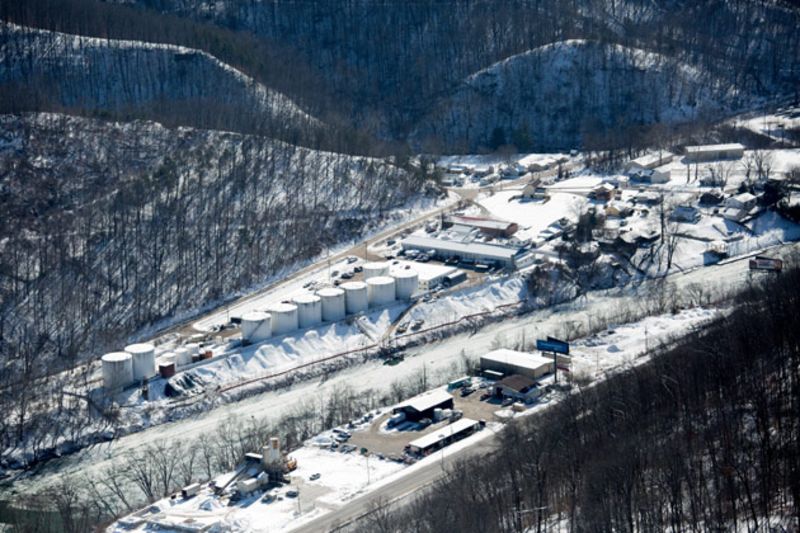
Does Bell Atlantic Corp. v. Twombly bear on the issue of preserving post-confirmation causes of action in Chapter 11 bankruptcy cases? That question occurred to my partner Ward Stone last month at Atlanta’s SBLI conference and I figured I’d try to answer it here. Although I didn’t find a case addressing the Twombly angle, I did find 2 very recent decisions that help answer the question.

First, District Judge Copenhaver (S.D. W. Va.) addressed the preservation issue, generally, in Johns v. Eastman Chemical on March 31, 2017. Second, Bankruptcy Judge Glenn (S.D.N.Y) also addressed it generally in MF Global Holdings USA v. Heartland Co-Op on April 13, 2017. Of course, these are just the 2 most recent cases–there are dozens of cases that address this issue. We’ll paint the big picture in Part 2.

Reading between the lines, those two judges, at least, would likely not impose Twombly‘s heightened “plausibility standard” on Chapter 11 plan proponents who are seeking to preserve causes of action for post-confirmation litigation. That is because both judges, even if they don’t state it in Twombly terms, adopt a pleading specificity that’s more forgiving than Twombly. However, as we’ll learn or be reminded of in this 2-part post, there is so much variation across the Circuits on the preservation issue that Twombly provides a useful framework for discussing the issue.

Therefore, we’ll split this post into 2 parts.

In Part 1, we’ll cover the Eastman Chemical and MF Global decisions and then “introduce” Twombly.

In Part 2, we’ll look at the preservation issue across the Circuits and then see what Twombly can add.

Facts

As tempting as it is to delve deep into the underlying facts of Eastman (contamination of the Elk River) and MF Global (more fallout from MF’s collapse), I’ll stay on the surface for both cases, as the legal issue is more important. In short, both cases involved motions to dismiss post-confirmation claims for failure to preserve the claims before confirmation.

In Eastman, Freedom Industries had filed a Chapter 11 after chemicals it had purchased from Eastman had leaked into and contaminated the Elk River. Johns, Freedom’s Chapter 11 plan administrator, sued Eastman after confirmation for all matter of claims arising from the contamination (the “Incident”). Eastman moved to dismiss on a number of theories, including the theory that Freedom was barred from pursuing claims related to the Incident because Freedom had not properly preserved those claims in its Chapter 11 plan.


On the preservation issue, specifically, Freedom’s plan provided that Freedom would have the “exclusive right to enforce and shall retain, all Causes of Action of the Debtor and the Estate against any Persons, including, without limitation, Claims or Causes of Action arising from or relating [to] the Incident.” In turn, it defined the “Incident” as the “occurrence whereby on January 9, 2014, a substance primarily consisting of [Crude MCHM] was released from Tank No. 396 at the [Freedom facility] onto the facility and into the Elk River in Charleston, WV.”

In MF Global, MF Global was an international commodities broker that collapsed with a Halloween 2011 bankruptcy filing following Jon Corzine’s risky foray into sovereign debt trading. Heartland Co-Op, a counter-party on a number of MF’s derivative contracts, had cancelled the contracts in response to the bankruptcy. MF’s Chapter 11 plan administrator sued Heartland for breach. Like Eastman, Heartland moved to dismiss, claiming that MF had not properly preserved its breach claims in its Chapter 11 plan.

Being a much larger case and involving way more potential claims, the MF Global plan and related documents were more general:

  • The plan contained a general preservation clause which the Court had explicitly approved under § 1123(b)(3)(B);
  • The schedules listed various contracts, including the subject contract, with specificity;
  • The SOFA highlighted potential assets/liabilities associated with their termination;
  • The SOFA, itself, also contained a general assertion of preservation;
  • The disclosure statement put counter-parties on notice that MF might seek termination damages, generally;
  • The plan contained additional language meant to defeat “list it or lose it”-type arguments.

Law

The pleading standard might differ somewhat between the Second and Fourth Circuits, but the courts employed similar analytical steps.

First, both judges agree that a plan confirmation order is a final order with res judicata effect. Therefore, it is essential that a plan proponent preserve sufficiently any claims that it contemplates bringing after confirmation.

Second, the starting point in the Bankruptcy Code is § 1123(b)(3). Under § 1123(b)(3), a Chapter 11 plan may provide for

(A) the settlement or adjustment of any claim or interest belonging to the debtor or to the estate; or

(B) the retention and enforcement by the debtor, by the trustee, or by a representative of the estate appointed for such purpose, of any such claim or interest.

Third, however, both judges recognize that the Code lacks express guidance about the specificity necessary to preserve a claim and, thus, that there is a conflict among the courts. In Part 2, we’ll focus on the conflict and the different approaches that different Circuits have adopted.

With those general principles and acknowledgments out of the way, Judge Copenhaver and Judge Glenn are left with deciding the preservation issue in their respective cases.

Eastman

Judge Copenhaver denied Eastman’s motion to dismiss.

Although Judge Copenhaver recognizes that the Fourth Circuit had not addressed the specificity issue, he concludes that Eastman’s suggested pleading standard is “excessively onerous.” That is, Freedom should not have to, as Eastman insisted, “specifically reserve[] each cause of action it intended to bring,” count by count. Concluding that § 1123(b)(3) is intended to expedite confirmation and rehabilitation, Judge Copenhaver holds that a “blanket reservation of a type or category of claim is sufficient.”

Ultimately, Freedom’s plan contained a cause of action retention provision; it defined “causes of action” as including all claims arising under contract, tort, and under state law; and it also provided a general factual basis for the claims by expressly identifying and defining the “Incident” (i.e., the chemical spill). Eastman couldn’t claim that it wasn’t on notice.

MF Global

Unlike Judge Copenhaver, Judge Glenn had binding Second Circuit precedent, as “exemplified by Judge Gerber’s decision in In re Perry H. Koplik & Sons, Inc.“:

Despite this conflict among the courts, it has been held in this Court, as affirmed by the district court and the Second Circuit, that a debtor’s plan of reorganization may reserve postconfirmation claims in general terms. In I. Appel [the Second Circuit] found a chapter 11 debtor’s general reservation of rights to litigate postconfirmation claims to be satisfactory, and rejected the notion that specific causes of action had to be preserved in a plan of reorganization…

Judge Glenn then emphasizes I. Appel, wherein Judge Marrero concluded that it is “neither reasonable nor practical to expect a debtor to identify in its plan of reorganization or disclosure schedules every outstanding claim it intends to pursue with the degree of specificity that the Katzes would require,” particularly given that such a specific description “of every claim the debtor intends to pursue could entail months or years of investigation and a corresponding delay in the confirmation…”

Similarly, he emphasizes Judge Walsh’s conclusion in Ampace that, “in large chapter 11 cases, the investigation and litigation of all possible avoidance actions to final judgment can take years” and confirmation often occurs “before the debtor and/or a trustee has undertaken a detailed investigation of the potential preference actions.”

In short, Judge Glenn concludes that Judge Marrero, Gerber, and Walsh’s approach “conforms to the plain language of” of § 1123(b)(3)(B), which, rather than requiring a “plan to specify every claim,” only provides that a “plan may do so.” (emphasis in original). And with that, Judge Glenn denied Heartland’s motion to dismiss.

Twombly

Famously in Twombly and its progeny, the U.S. Supreme Court altered the notice pleading standard under Rule 8(a).

On the one hand, Rule 8(a) required, and still requires, that a claimant make “a short and plain statement of the claim showing that the pleader is entitled to relief.” On the other hand, the “no set of facts” standard from Conley has, with Twombly, been replaced by a stricter “plausibility” standard. That is, before Twombly, a court could only dismiss a claim if it appeared beyond doubt that there was “no set of facts” that the plaintiff could prove that would entitle it to relief. After Twombly, a plaintiff must plead “enough facts to raise a reasonable expectation that discovery will reveal evidence of illegal agreement.”

As Justice Souter explained, and as every motion to dismiss brief or decision after 2008 articulates in some form or fashion:

[W]e do not require heightened fact pleading of specifics, but only enough facts to state a claim to relief that is plausible on its face. Because the plaintiffs here have not nudged their claims across the line from conceivable to plausible, their complaint must be dismissed.

The Court also clarified that it wasn’t imposing a “probability” requirement.

Having created more questions than it answered, though, the Supreme Court tried to clarify things in Ashcroft v. Iqbal:

Reaffirming Twombly, Justice Kennedy, in a 5-4 decision, “simplified” things by establishing a 2-pronged approach. First, a federal court need only accept as true factual allegations, not legal conclusions disguised as facts. Second, the factual allegations must state a plausible claim for relief.

Conclusion

The question, which we’ll explore in Part 2, is the extent to which Twombly  has any bearing on or adds value to the preservation issue. We’ll try to answer that question in the broader context of how other Circuits, besides the Second and Fourth Circuits, determine whether a plan proponent has properly preserved causes of action. Some are less forgiving, and approach Twombly-style pleading.

If you’d like to stay on top of this and other important bankruptcy confirmation issues, then you can subscribe to Plan Proponent via email here.

The Association of Insolvency & Restructuring Advisors published its 1st Quarter 2017 Journal last Friday. Richard Gaudet, of HDH Advisors, LLC, and I wrote the article titled “Till Realized: Calculating Objective Chapter 11 Cramdown Rates without Expert Testimony.” The focus of the article is on the application of the U.S. Supreme Court case of Till v. SCS Credit Corp. (2004) to Chapter 11 debtors who can’t afford to hire an interest rate expert. Specifically, is it possible for a debtor to establish a Till-compliant cramdown interest rate objectively and economically, all without the necessity of engaging an expert witness? We think so.

To read the article, click on the image or link below.

Link: https://aira.org/pdf/journal/2017_quarter_1.pdf


If you’d like to stay on top of this and other important bankruptcy confirmation issues, then you can subscribe to Plan Proponent via email here.